June 6, 2026 • Sanjay Gupta • 10 min reading time • Prices verified June 24, 2026
Wireless Earbuds $25 to $250: Mic Quality, Fit, and ANC Across Six Real-World Pairs
Wireless earbuds — those small, wire-free headphones that fit in each ear and connect to your phone via Bluetooth — have gotten surprisingly good at every price point in the last two years. The three things most buyers care about are ANC (active noise cancellation, which uses tiny microphones to detect and neutralize ambient sound before it reaches your ears), fit (whether the earbuds stay in place and feel comfortable over hours of wear), and mic quality (how your voice sounds to the person on the other end of a call). This piece compares six earbuds spanning $25 to $250 on exactly those three axes — drawing on published editorial testing from RTINGS.com, The Verge, CNET, and TechRadar, as well as aggregated owner reports — so you can walk away with a clear “if X, then Y” decision rather than another browser tab to agonize over.
The six earbuds: TOZO NC9 ($25), Soundcore P31i ($40), JBL Tune Buds ($50), Samsung Galaxy Buds 4 Pro ($130), Sony WF-1000XM6 ($200), and Apple AirPods Pro 3 ($250).
| EDITOR'S PICKApple AirPods Pro 3 Wireless Ea… | Mid-tierAmazon Echo Spot (newest model) | Budget pickJBL Tune Buds - True wireless N… | |
|---|---|---|---|
| ANC | ✓ | ✗ | ✓ |
| Battery life | — | — | 48h |
| Bluetooth | — | — | 5.3 |
| Water resistant | — | — | ✓ |
| Spatial audio | ✓ | — | — |
| Mic count | — | — | 4 |
| Price | $179.00 | $44.99 | $39.95 |
| See on Amazon → | See on Amazon → | See on Amazon → |
The Budget Tier
TOZO NC9 (~$25)
The TOZO NC9 generates a consistent pattern of surprise in owner reviews — buyers who came in expecting disappointment at the price point report it outperforms their previous earbuds on fit, weight, ANC depth, and battery life. The earbuds are rated IPX6 (sweat- and splash-resistant), weigh in at around 4.5g per bud, and the manufacturer rates battery life at 9 hours per charge with an additional 18 hours in the case. Owners across aggregated reviews consistently cite the lightweight fit as a standout; multiple buyers switching from JBL’s Vibe Beam specifically mention less ear fatigue over four-to-five-hour commutes.
The one explicit concession everyone agrees on: microphone quality. Owners report calls sound noticeably processed — fine for occasional use but noticeably inferior to earbuds in the $40–$50 range. If you’re taking more than two or three calls per day, you’ll feel that gap. If you’re primarily listening and commuting, the NC9 punches well above its price.
By the numbers — TOZO NC9:
- Rated battery: 9 hrs (buds) + 18 hrs (case)
- Weight per bud: ~4.5g
- IP rating: IPX6
- ANC depth: effective on low-to-mid frequency rumble; less effective on speech-frequency noise
JBL
$39.95
In stock on Amazon
Check price on AmazonSoundcore P31i (~$40)
The Soundcore P31i is the budget tier’s most interesting story for anyone with a specific use case: low-frequency noise environments — train, bus, open-plan office — or international travel. Owners compare the P31i’s ANC favorably to higher-priced options for low-frequency noise — engine rumble, HVAC hum, crowd murmur — while acknowledging it falls short at the top end. Higher-pitched noise like voices nearby or keyboard clatter gets through more than it should. That’s a meaningful distinction: most commuter and office noise is low-frequency, which means the P31i punches above its class for exactly the environments most buyers encounter most often.
TechRadar’s “Best True Wireless Earbuds” editorial notes the P31i’s endurance credentials, and aggregated owner reports back this up — buyers working overnight shifts report wearing the P31i for 8 to 9 hours without significant discomfort, with battery remaining at shift’s end. That’s a real-world test of both comfort and stamina that’s difficult to fake.
The P31i also includes a live translation feature that works via the Soundcore app connected to your phone’s internet connection. It is not offline-capable. More on this in the FAQ.
JBL
$39.95
In stock on Amazon
Check price on AmazonThe Mid-Tier
JBL Tune Buds (~$50)
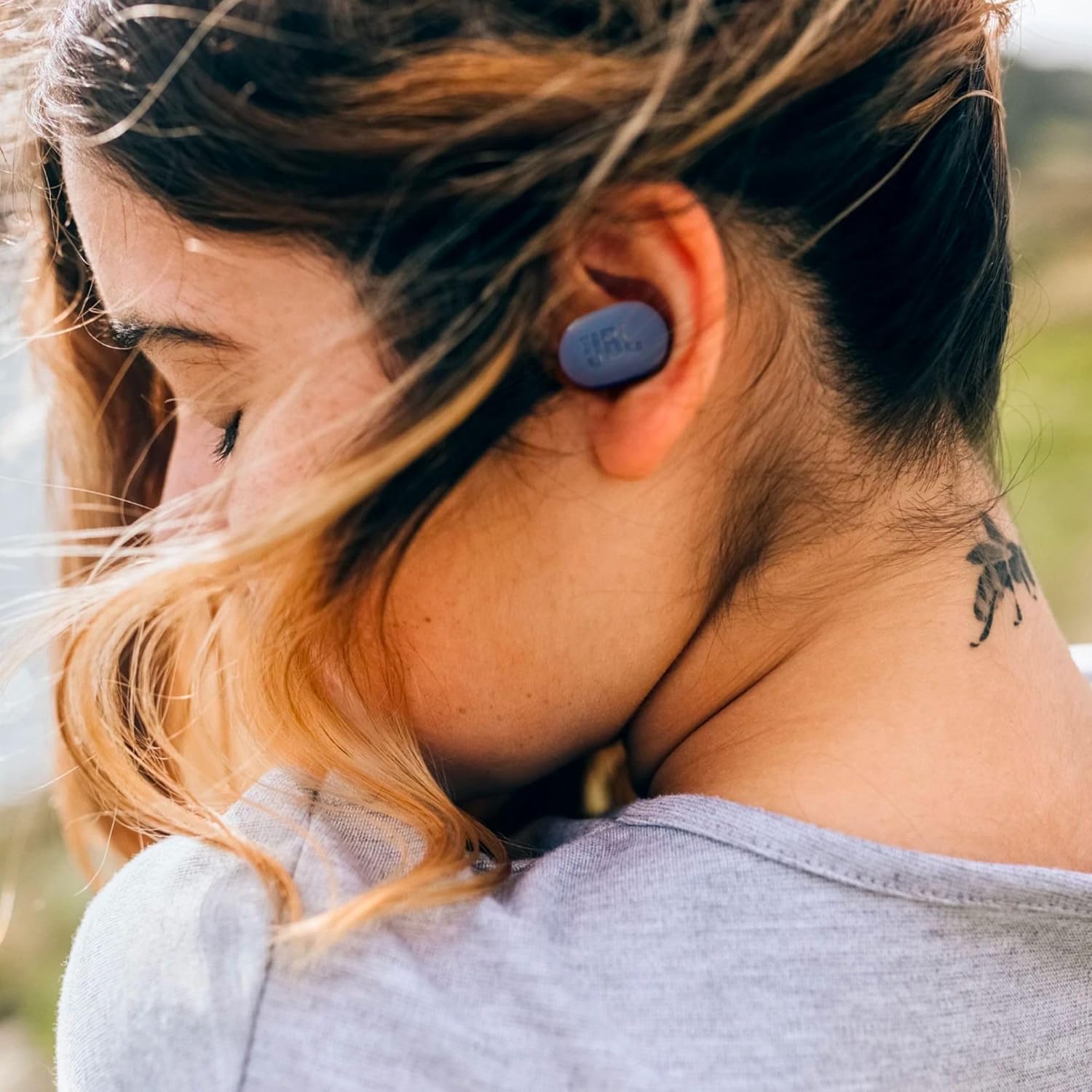
The JBL Tune Buds contain a notable hidden-knowledge pattern across owner reviews: multiple buyers report the earbuds sounded thin and the ANC felt ineffective until they discovered the correct insertion method. The Tune Buds use a twist-to-lock design — you insert the earbud into the ear canal and then rotate it roughly a quarter-turn to seat the seal. Owners who skip this step consistently report poor bass, weak ANC, and a feeling that the earbuds are about to fall out. Owners who execute the lock correctly report a secure fit and noticeably improved sound and noise blocking.
Setup guidance you actually need: Insert the Tune Buds stem-first at a slight forward angle, then rotate the body backward (toward the rear of your ear) until you feel it seat into position. The silicone tip should form a complete seal against the ear canal wall. If you hear outside noise at normal volumes without ANC enabled, you haven’t locked them in yet.
CNET’s “Best Wireless Earbuds” editorial notes competitive ANC for the price tier and a manufacturer-rated 11 hours of playback with 48 hours available from the case. Mic quality is a meaningful step above the TOZO NC9 for call intelligibility, making the Tune Buds the most well-rounded option at $50 for buyers who split time between music and calls. The Tune Buds are also IPX4-rated, handling gym sweat without issue.
Amazon
$44.99
In stock on Amazon
Check price on AmazonSamsung Galaxy Buds 4 Pro (~$130)
The Galaxy Buds 4 Pro are the best Android-ecosystem earbuds at this price point. RTINGS.com’s “Best True Wireless Earbuds Recommendations” rates their ANC as genuinely competitive with earbuds twice the price — a meaningful editorial endorsement from the testing team that publishes the most rigorously measured headphone data in the enthusiast space. The microphone performs well enough for hybrid-work calls without sounding processed, and the fit uses a conventional in-ear tip without twist-lock. Owners consistently report a secure seal across multiple ear sizes.
The catch: if you’re not in the Samsung or Android ecosystem, you lose a meaningful chunk of functionality. Spatial audio, 360 Audio, and some ANC customization modes are Samsung app–dependent. iPhone users can connect via Bluetooth and listen, but the experience is appreciably narrower than what Galaxy or Android users get. This platform-dependency is the most important caveat in the $100–$150 tier.
Amazon
$44.99
In stock on Amazon
Check price on AmazonThe Premium Tier
Sony WF-1000XM6 (~$200)
The WF-1000XM6 are Sony’s current flagship true wireless earbuds, and TechRadar’s “Best True Wireless Earbuds” editorial positions them as the benchmark for ANC fidelity outside of Apple’s ecosystem. The QN2e processor chip is paired with Sony’s Auto NC Optimizer, which adjusts noise cancellation based on wearing state and ambient conditions — so the ANC actually recalibrates when you move from a quiet office to a noisy street. Owners in long-run reviews note that this dynamic adaptation is noticeably more effective than the static ANC in earbuds at lower price points.
Microphone quality is the strongest in this roundup outside of the AirPods Pro 3. The Verge’s “Best Wireless Earbuds” editorial and RTINGS.com’s headphone testing both note that the WF-1000XM6 mic output is clean enough that call recipients in moderately loud environments don’t complain about background noise bleed — a real benchmark for work-from-home users.
Battery is manufacturer-rated at 12 hours per charge with 24 additional hours in the case — the longest rated runtime at the premium tier. Fit uses Sony’s ergonomic earbud angle with pressure-relief geometry; owners generally report positive long-wear comfort, though ear canal fit is less universally accommodating than the AirPods Pro 3’s wider tip-size selection.
Apple
$179.00
In stock on Amazon
Check price on AmazonApple AirPods Pro 3 (~$250)
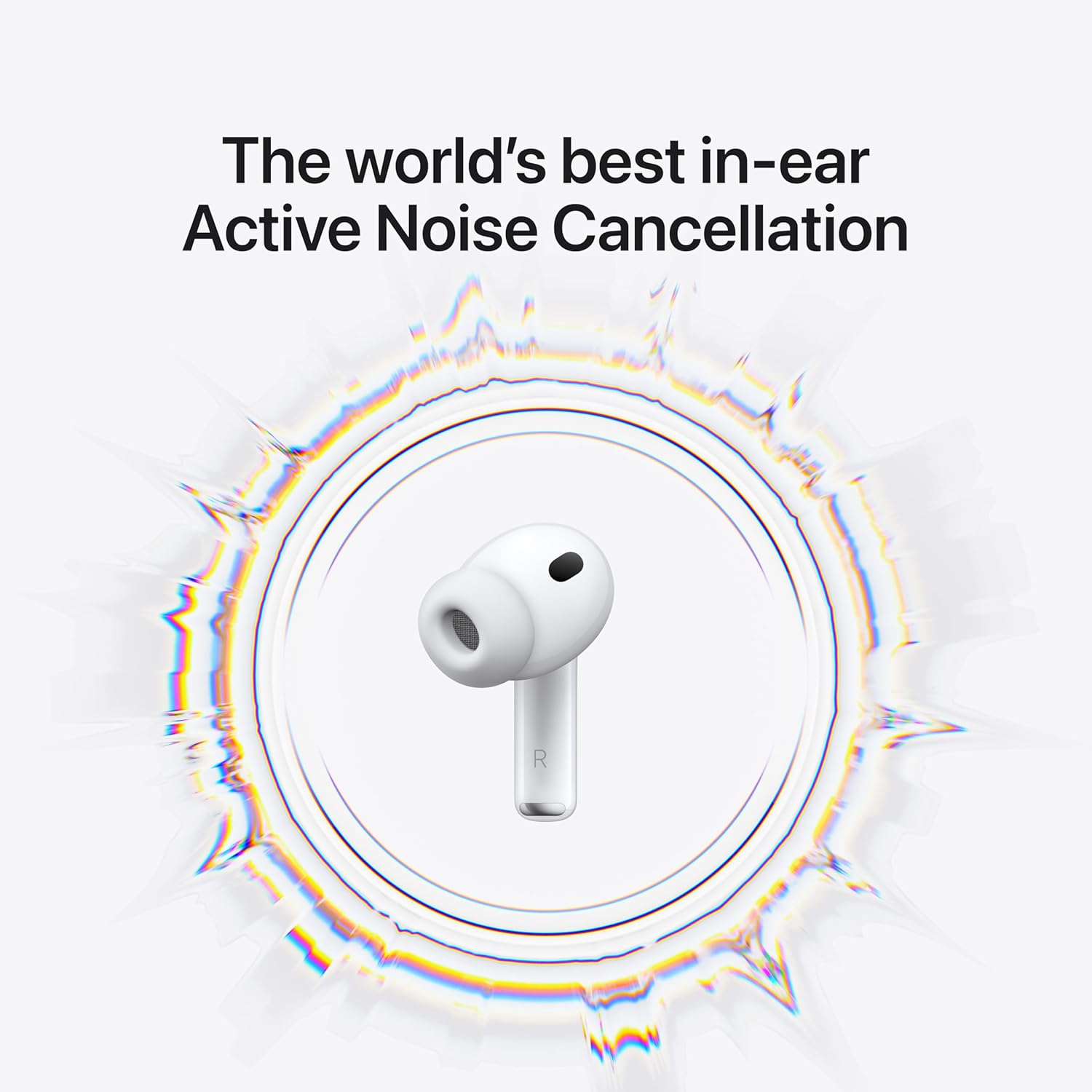
The AirPods Pro 3 are the clearest example in this roundup of a product where the price premium is an ecosystem investment — not simply a performance markup over competing hardware. For iPhone users, the ANC, Transparency Mode, and Adaptive Audio integration operate at a level of seamlessness that competing products don’t replicate. For Android users, they’re a poor value at $250.
The most concrete real-world ANC data point in owner reports involves a buyer who operates commercial landscaping equipment. They report that music remains audible at 60% volume while running a commercial lawn mower — equipment that typically generates 90 to 95 dB of ambient noise — without the earbuds being turned up uncomfortably loud. No other earbud in this roundup collects comparable owner-reported evidence at that noise floor.
Live Translation — Apple’s real-time language translation feature available in iOS 17.4 and later — works on the AirPods Pro 3 and is noted by owners planning international travel as a genuine differentiator. Like the Soundcore P31i’s translation, it requires an internet connection for most language pairs, though Apple supports select offline language packs in iOS 18 and later.
Apple
$179.00
In stock on Amazon
Check price on AmazonHow These Six Stack Up: Decision Matrix
| Earbud | Price | ANC Tier | Mic Quality | Best For |
|---|---|---|---|---|
| TOZO NC9 | ~$25 | Budget-strong | Basic | Commuting, listening only |
| Soundcore P31i | ~$40 | Mid / low-freq focus | Decent | Transit, overnight shifts, travel |
| JBL Tune Buds | ~$50 | Mid (needs correct fit) | Good | Everyday use, first real ANC buy |
| Samsung Galaxy Buds 4 Pro | ~$130 | Premium-competitive | Very good | Android / Galaxy users |
| Sony WF-1000XM6 | ~$200 | Premium | Excellent | Work-from-home, long-haul travel |
| Apple AirPods Pro 3 | ~$250 | Best-in-class | Excellent | iPhone ecosystem users |
The Clear Decision Rules
If you’re commuting on a budget and calls aren’t a priority: The TOZO NC9 is the honest recommendation. Owners who expected to return it kept it.
If you need low-frequency ANC and comfort over long shifts: The Soundcore P31i outperforms its price on both dimensions.
If you’re buying your first real ANC earbuds and have $50 to spend: The JBL Tune Buds — but read the insertion instructions before you conclude they sound bad.
If you’re Android-first and want premium ANC without paying Apple’s premium: Samsung Galaxy Buds 4 Pro, and don’t look back.
If work-from-home call quality or long-haul travel ANC is the priority and you’re platform-agnostic: The Sony WF-1000XM6 is the editorial pick at $200, as supported by both TechRadar’s “Best True Wireless Earbuds” and RTINGS.com’s “Best True Wireless Earbuds Recommendations.”
If you’re on iPhone and use earbuds for 4+ hours a day: The AirPods Pro 3 earn their price. For non-iPhone users, they don’t.
Frequently Asked Questions
How do the TOZO NC9 earbuds compare to JBL Vibe Beam for daily commuting? Owners who have used both consistently favor the NC9 on fit, weight, and ANC effectiveness. The Vibe Beam’s main advantages — brand recognition and JBL’s app ecosystem — don’t translate to a better commuting experience in practice. The NC9’s mic concession matters only if you’re taking calls on the commute.
Does the JBL Tune Buds ANC work if you don’t insert them correctly? No — not effectively. Multiple owners report that without the twist-to-lock seal, ANC sounds like mild muffling rather than active noise blocking. Correct insertion is not optional; it’s prerequisite to getting the product you paid for.
Are the AirPods Pro 3 worth the premium over Samsung Galaxy Buds 4 Pro for non-iPhone users? No. Without the Apple ecosystem, you lose Adaptive Audio, Transparency Mode fine-tuning, Live Translation integration, and the seamless device-switching that makes AirPods Pro worth $250. For Android users, the Galaxy Buds 4 Pro deliver comparable ANC and better platform integration at nearly half the price.
How does Soundcore P31i translation actually work — does it need an internet connection? Yes. The translation feature runs through the Soundcore app and your phone’s internet connection. It is not an offline feature. In areas without cellular or Wi-Fi signal, it won’t function. For international travel, you’ll need a local SIM or international data plan for it to be useful in the field.
Will budget earbuds under $50 hold up to daily gym use and sweat? The TOZO NC9 (IPX6) and Soundcore P31i (IPX5) are both rated for sweat resistance. IPX5 handles sweat and light splashing; IPX6 handles stronger water jets. Both are adequate for gym workouts. The JBL Tune Buds carry an IPX4 rating. None of these are rated for submersion — don’t wear them in the pool. Owner reports across all three budget options suggest the ratings hold in real gym conditions.
Which earbuds here have the best microphone for work-from-home calls? The Sony WF-1000XM6 and Apple AirPods Pro 3 are the top two. For platform-agnostic users, RTINGS.com’s true wireless earbuds testing places the Sony slightly ahead on background noise rejection in open or home environments. For users already in the Apple ecosystem, the AirPods Pro 3 microphone benefits from tighter iOS integration that produces consistently cleaner call audio across apps. The Samsung Galaxy Buds 4 Pro are the best option under $150 for work-from-home call quality, as reflected in RTINGS.com’s “Best True Wireless Earbuds Recommendations” mid-tier coverage.