May 27, 2026 • Sanjay Gupta • 8 min reading time • Prices verified June 24, 2026
Sony ZV-E10 II vs. Canon EOS R50 for Vlogging: Which APS-C Camera Wins for Content Creators
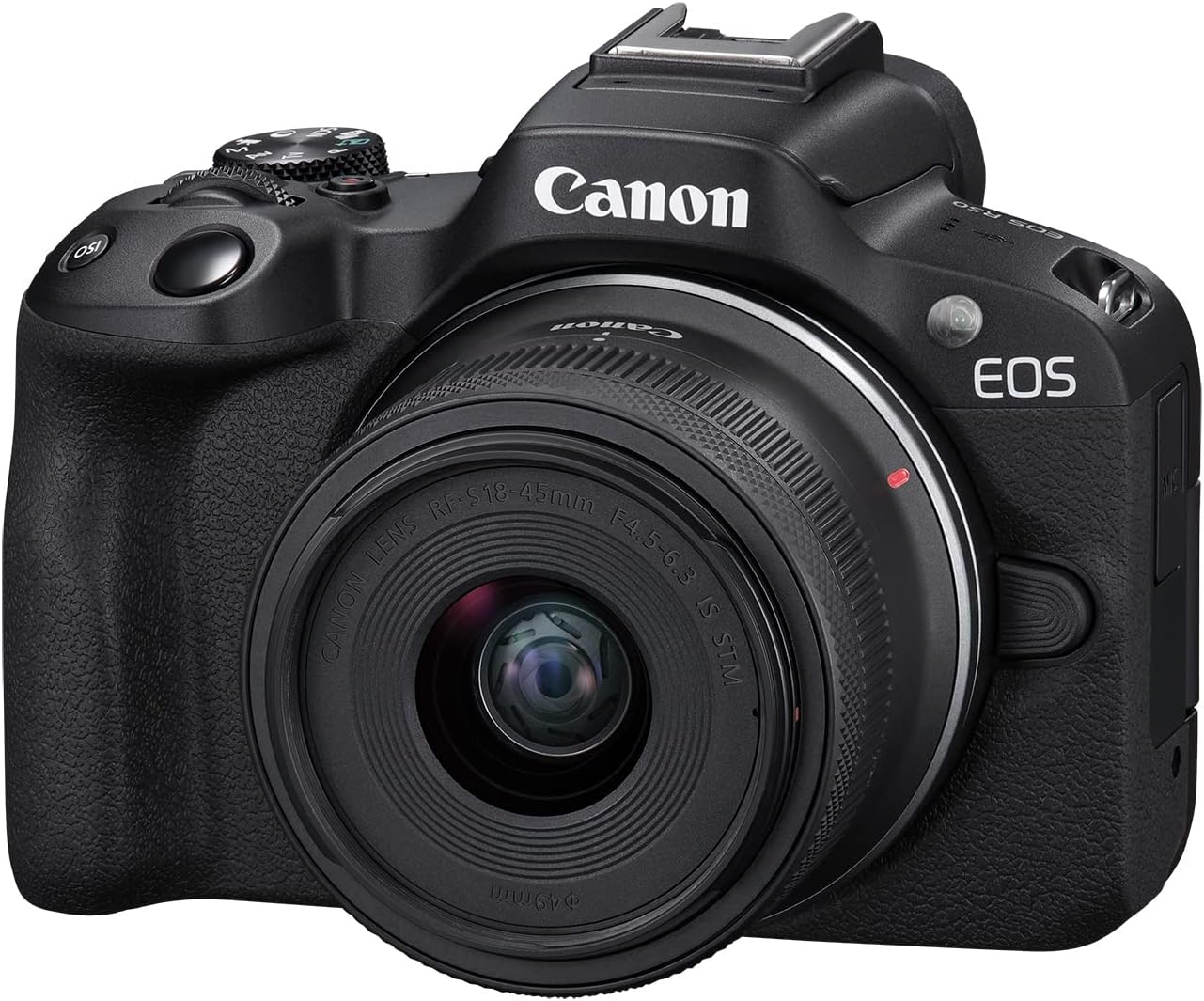
If you’ve been posting video to YouTube, Instagram, or TikTok for more than a few months and you’re ready to move beyond your phone, you’ve almost certainly landed on two names: the Sony ZV-E10 II and the Canon EOS R50. Both are APS-C mirrorless cameras — meaning they use a sensor roughly half the size of a film frame, which delivers substantially better image quality than a smartphone in a body small enough to carry everywhere. Both sit in the $700–$900 range with a kit lens. And both are explicitly designed for creators who shoot video first and stills second.
So why does choosing between them feel hard? Because they make genuinely different bets about what a vlogger actually needs. This comparison names those bets explicitly, shows you the data where it matters, and ends with a clear decision rule — because if you have a channel growing right now, you don’t need a hedge. You need an answer.
| EDITOR'S PICK[Sony Alpha 6700 – APS-C Interch…](https://www.amazon.com/dp/B0CKH2D5XL?tag=greenflower20-20) | Mid-tier[Canon EOS R50 Mirrorless Camera…](https://www.amazon.com/dp/B0FKCR3LXG?tag=greenflower20-20) | Budget pick[OM SYSTEM Olympus E-M10 Mark IV…](https://www.amazon.com/dp/B08D5XVHNM?tag=greenflower20-20) | |
|---|---|---|---|
| Resolution | 26 MP | 24.2 MP | 20 MP |
| Mount | Sony E | Canon RF | Micro Four Thirds |
| IBIS | — | — | ✓ |
| AI Subject Tracking | ✓ | — | — |
| Kit Lens Focal Range | — | 18-45mm | 14-42mm |
| Log Shooting | ✓ | — | — |
| Price | $1,398.00 | $799.00 | $699.99 |
| See on Amazon → | See on Amazon → | See on Amazon → |
The Core Tradeoff in One Sentence
The Sony ZV-E10 II bets on raw video quality and a vast lens ecosystem. The Canon EOS R50 bets on best-in-class autofocus and a gentler learning curve. Neither bet is wrong — they’re just right for different creators.
Video Quality and Specs
This is the clearest gap between the two cameras, and it has widened since Sony refreshed the ZV-E10 line into its second generation.
Resolution and Frame Rates
| Spec | Sony ZV-E10 II | Canon EOS R50 |
|---|---|---|
| Max video resolution | 4K/60p (oversampled from 6K) | 4K/30p (cropped); 4K/24p (uncropped) |
| Log profile available? | Yes (S-Log3) | Yes (C-Log3) |
| In-body image stabilization | Yes | No |
| Body price (body only, May 2026) | ~$900 | ~$750 |
Canon APS-C
$799.00
In stock on Amazon
Check price on AmazonDPReview’s Sony ZV-E10 II review and Canon EOS R50 review both note that the ZV-E10 II’s oversampled 4K output — where the camera reads data from a 6K-wide area and scales it down to 4K, reducing digital noise and sharpening fine detail — is a meaningful step above what the R50 delivers at equivalent settings. The R50 shoots uncropped 4K only at 24fps; switch to 30fps and you lose roughly 1.6x of your field of view, which forces lens choices and complicates shooting in tight spaces like a home office or car interior.
Stabilization
The ZV-E10 II adds in-body image stabilization (IBIS) — a gyroscope system inside the camera body that compensates for hand movement regardless of which lens is attached. The R50 relies entirely on optical image stabilization (OIS) built into certain lenses, which means stabilization quality varies depending on which glass you’re using. TechRadar’s Sony ZV-E10 II hands-on preview describes IBIS as one of the headline practical upgrades for handheld creators, not merely a spec-sheet checkbox.
Canon APS-C
$799.00
In stock on Amazon
Check price on AmazonColor Science and Log Profiles
S-Log3 on the Sony and C-Log3 on the Canon both deliver flat color profiles — footage that looks washed out on set but retains more tonal information for color grading in post. If you’re doing professional-grade color work, both cameras support this workflow. If you’re not, Canon’s Picture Styles and Sony’s Creative Looks both offer pleasing in-camera looks without grading, and neither brand has a meaningful edge here for creators who deliver straight from camera.
The verdict on video specs: If your ceiling is YouTube at 4K/30p and you’re not doing advanced color work, the R50 is perfectly adequate. If you’re building toward 4K/60p content, selling footage, or delivering for clients — even occasionally — the ZV-E10 II’s output floor is higher.
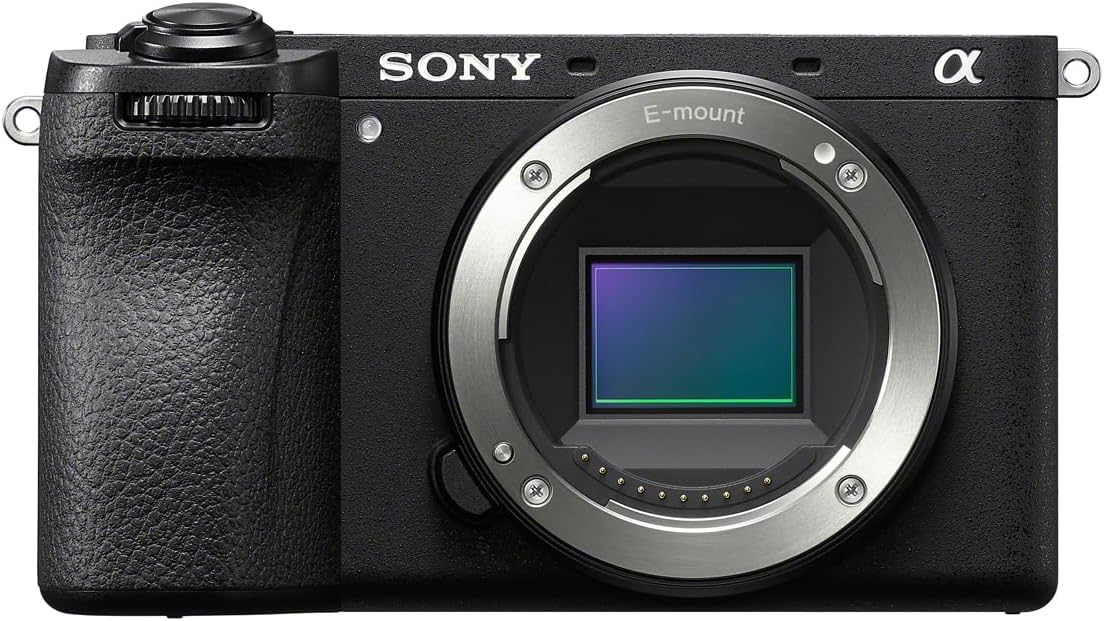
Sony
$1,398.00
In stock on Amazon
Check price on AmazonAutofocus Performance
This is where the R50 fights back hard, and it’s worth being direct about the gap.
Canon’s Dual Pixel Advantage
Canon’s Dual Pixel CMOS AF II system is widely regarded as the gold standard in consumer-to-prosumer mirrorless autofocus. The Verge’s Canon EOS R50 review describes subject tracking that locks on immediately and rarely loses the plot, including reliable eye and face detection even in mixed lighting. RTings.com’s camera autofocus benchmarks consistently place Canon’s Dual Pixel II implementation among the most reliable options for video — particularly for single-subject vlogging where the creator is moving through a frame with no camera operator.
Sony’s Autofocus in Practice
Sony’s autofocus on the ZV-E10 II is genuinely good — better than the original ZV-E10’s, which had documented hunting issues in low light — but DPReview’s ZV-E10 II review and TechRadar’s Canon R50 buying guide both note that Canon’s subject tracking under adverse conditions (side lighting, partial occlusion, fast movement) holds a half-step advantage. For a creator who is always the sole subject, at controlled distances, in decent light, the difference is unlikely to appear in your final edit. For a creator who shoots run-and-gun, interviews, or any situation where focus needs to solve itself without babysitting — Canon’s reliability reduces operational risk in a real way.
The verdict on autofocus: Canon wins this category. If you’re a solo creator shooting without a dedicated camera operator and you can’t afford a missed focus pull mid-sentence, the R50’s AF system reduces cognitive load in a way that shows up in your output quality.
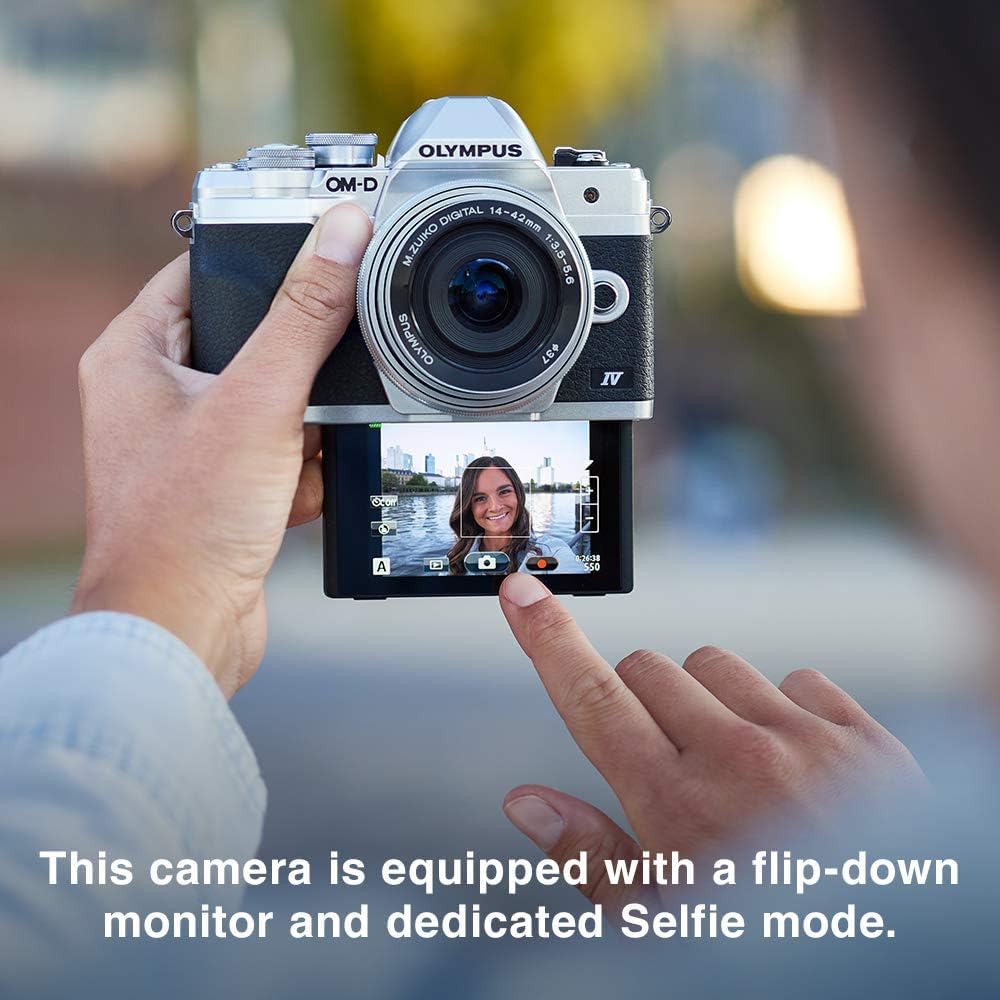
OM
$699.99
In stock on Amazon
Check price on AmazonEcosystem, Lenses, and Long-Term Cost of Ownership
This is the decision most buyers underweight at purchase time, and it’s where the math gets consequential over time.
Sony E-Mount Depth
Sony’s E-mount lens ecosystem is one of the most mature in the mirrorless world. The range spans from sub-$200 primes to professional-grade G Master glass, and there’s a robust third-party market from Tamron, Sigma, and Viltrox. CNET’s Best Cameras for Vlogging guide specifically highlights the Tamron 17-70mm f/2.8 as a standout value for Sony E-mount creators who want a versatile one-lens kit. If you start with the ZV-E10 II kit lens and want to add a fast equivalent for interviews or low-light work, you have multiple options at every price point.
Canon APS-C
$799.00
In stock on Amazon
Check price on AmazonCanon RF-S Mount Reality Check
Canon’s RF-S mount (the APS-C variant of their RF system) is newer and meaningfully more limited. As of mid-2026, the native RF-S lens lineup remains relatively thin compared to Sony’s E-mount catalog. Canon’s full-frame RF lenses mount and autofocus correctly on the R50 but are larger and more expensive than what most vloggers actually need. Third-party support is growing — Sigma has begun releasing RF-mount glass — but it has not yet matched Sony E-mount’s depth at the budget and midrange tier.
Total cost of ownership snapshot:
- ZV-E10 II kit → add a Tamron 11-20mm f/2.8 for wide vlogging (approximately $480): total investment approximately $1,380
- R50 kit → the Canon RF-S 10-18mm STM adds approximately $300: total approximately $1,050
On paper, Canon’s path looks cheaper at the first lens add. But as your kit grows toward three or more lenses, Sony’s ecosystem depth at the $300–$600 range is wider and more competitive over time.
Sony
$1,398.00
In stock on Amazon
Check price on AmazonErgonomics and Shooting Experience
Physical Controls and Body Feel
The ZV-E10 II is physically smaller and lighter, which matters for extended handheld shooting or carry-on packing. TechRadar’s Canon EOS R50 buying guide describes the R50 body as feeling like “a proper camera that happens to be small” — it has a more traditional camera layout with a dedicated mode dial and more physical controls accessible without diving into menus. Creators who’ve used DSLRs or higher-end mirrorless bodies before will find Canon’s ergonomics more intuitive out of the box.
OM
$699.99
In stock on Amazon
Check price on AmazonScreen and Mobile Integration
Both cameras feature a fully articulating LCD screen that flips all the way around to face you while you shoot — a non-negotiable for solo vlogging and a check mark both bodies earn without qualification. Sony’s interface carries a steeper initial learning curve; menus are denser and less logically organized than Canon’s. That said, the ZV-E10 II’s Creators’ App mobile integration enables wireless remote monitoring and file transfer on location, and long-run owners consistently note that once the camera is configured, the shooting experience is streamlined for content creation workflows.
Sony also includes a Product Showcase autofocus mode — a setting that temporarily shifts AF priority from your face to an object you hold up toward the lens — which reflects a more intentional vlogging-first feature roadmap. Canon’s firmware updates have historically been more conservative about adding creator-specific features post-launch.
Canon APS-C
$799.00
In stock on Amazon
Check price on AmazonThe Decision Rule
Here’s the framework, stated plainly:
Choose the Sony ZV-E10 II if:
- You shoot 4K/60p or plan to within the next year
- You’re building a lens kit over time and want the deepest affordable selection
- You shoot handheld frequently and want IBIS handling stabilization regardless of lens
- You’re delivering for clients or platforms where output ceiling matters
Choose the Canon EOS R50 if:
- Autofocus reliability is your single biggest operational bottleneck — you shoot solo, fast, and can’t afford to miss focus
- You’re already in the Canon ecosystem and want mount compatibility
- Your content lives at 4K/30p and you’re not planning to color-grade heavily
- You want a more intuitive setup experience and a lower entry price
OM
$699.99
In stock on Amazon
Check price on AmazonOne more honest note: if you’re currently shooting on a recent flagship smartphone and wondering whether either camera will look dramatically better — yes, both will, particularly in low light and with shallow depth of field. The upgrade is real. Don’t let the comparison between these two bodies delay the decision to step up from a phone; either camera is a meaningful improvement. The right choice is whichever one matches the specific friction point that is actually slowing your content down right now.
The ZV-E10 II is the stronger technical platform heading into late 2026. The R50 is the more forgiving tool. Both earn their price.
Pricing reflects May 2026 market rates. Specs sourced from manufacturer published documentation. Editorial coverage cited in plain text: DPReview Sony ZV-E10 II review; DPReview Canon EOS R50 review; The Verge Canon EOS R50 review; TechRadar Sony ZV-E10 II hands-on preview; TechRadar Canon EOS R50 buying guide; CNET Best Cameras for Vlogging 2025–2026; RTings.com camera autofocus benchmarks.