June 9, 2026 • Sanjay Gupta • 8 min reading time • Prices verified June 24, 2026
Smart Plugs in 2026: Does Matter Protocol Actually Solve the Compatibility Headache?
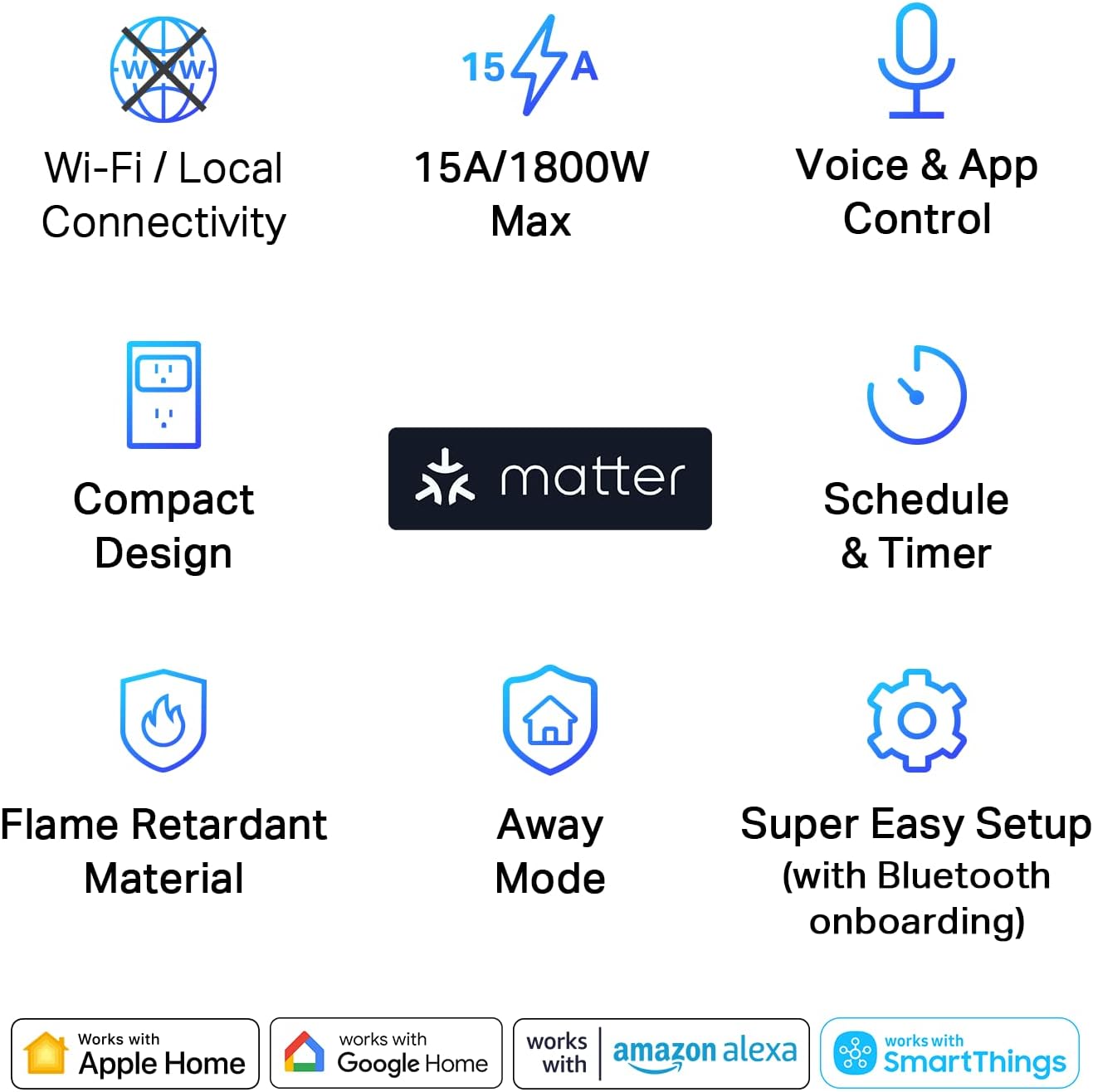
A smart plug is exactly what it sounds like: an adapter that fits between your wall outlet and whatever’s plugged into it — a lamp, a fan, a space heater — and lets you control that device remotely via an app or voice assistant. No electrician required. The appeal is simple: you get on/off scheduling, remote control when you’re away, and sometimes energy monitoring, all without replacing the actual appliance. What has not been simple, historically, is making a smart plug bought today work with the smart home ecosystem you might switch to next year. That’s the problem Matter was designed to fix. Matter is a shared technical standard — think of it as a common language — that lets smart home devices from different brands talk to each other without proprietary bridges or locked-in apps. It launched in late 2022 with significant fanfare, and by mid-2026 it’s in its third major revision. The question worth asking now: does it actually work, or is “Matter-compatible” still mostly a marketing checkbox?
| EDITOR'S PICK[Kasa Smart Plug Power Strip HS3…](https://www.amazon.com/dp/B07G95FFN3?tag=greenflower20-20) | Mid-tier[kasa smart Plug Power Strip KP3…](https://www.amazon.com/dp/B083JKSSR5?tag=greenflower20-20) | Budget pick[Kasa Smart Plug HS103P4](https://www.amazon.com/dp/B07RCNB2L3?tag=greenflower20-20) | |
|---|---|---|---|
| Outlets | 6 | 3 | 1 |
| USB Ports | 3 | 2 | 0 |
| Surge Protection | ✓ | ✓ | ✗ |
| Form Factor | Power strip | Power strip | Plug |
| Pack Count | 1 | 1 | 4 |
| Price | $37.99 | $24.99 | $23.99 |
| See on Amazon → | See on Amazon → | See on Amazon → |
What Matter 1.3 Actually Promises (and Where It Still Falls Short)
The pitch from the Connectivity Standards Alliance (CSA) — the industry body that maintains the Matter specification — is compelling on paper. A Matter-certified smart plug should pair with Apple Home, Amazon Alexa, Google Home, and Samsung SmartThings from a single setup flow, with no manufacturer account required for local control. Your automations work even when the cloud goes down. You can hand off control to a new ecosystem without re-pairing every device.
Matter 1.3, released in mid-2025 per the CSA’s official release notes, added energy reporting as a standardized feature — meaning a Matter plug can now surface wattage and kilowatt-hour data to any compatible controller, not just the manufacturer’s own app. That’s a meaningful upgrade; it was one of the loudest complaints against early Matter plugs, which often required falling back to proprietary apps just to see power draw.
The friction that remains, however, is real and worth naming:
-
Multi-admin pairing is still clunky in practice. The spec allows one plug to be paired with multiple controllers simultaneously — Alexa and Apple Home, for instance — but Ars Technica’s 2025 review of the Matter ecosystem noted that the pairing flow for a second controller frequently requires returning to the manufacturer’s app or QR code, which most users find confusing. The promise is there; the UX isn’t seamless yet.
-
Thread border routers are not universal. Many Matter plugs use Thread as their radio protocol — a low-power mesh network that routes through a border router (a device that bridges Thread to your home network, often a smart speaker or hub). If your ecosystem doesn’t include a Thread border router, you’ll fall back to Wi-Fi, which is fine but eliminates the mesh-networking advantage.
-
The “works with Matter” logo doesn’t guarantee feature parity across platforms. The Verge’s 2025 coverage of Matter 1.3 called this out directly: energy reporting may show up in Google Home but not in the current version of a third-party controller app, because each platform updates its Matter implementation on its own schedule.
The honest summary: Matter has moved the needle. Interoperability is genuinely better in 2026 than it was in 2022. But “compatible” and “seamless” are still different things.
The Smart Plug Market in 2026: A Snapshot
By the numbers
- Average Matter-certified smart plug street price: $18–$35 (single outlet, no energy monitoring) / $28–$55 (with energy monitoring)
- Average non-Matter Wi-Fi smart plug: $8–$18
- Matter premium over equivalent non-Matter plug, same brand: roughly $8–$15
- CSA-listed Matter-certified plug SKUs as of Q1 2026: 340+
That price delta is the central decision variable for most buyers. CNET’s 2026 smart plug roundup and Wirecutter’s updated guide both note that entry-level non-Matter plugs from established brands — the $10–$15 tier — still represent excellent value if you are committed to a single ecosystem and aren’t planning to change it. The Matter premium only pays off under specific conditions, which we’ll address in the decision framework below.
The energy-monitoring segment is where the math shifts. TechRadar’s 2025 analysis of Matter smart plugs found that buyers who want power monitoring and ecosystem flexibility are best served by Matter 1.3-certified plugs, because the standardized energy reporting feature means you’re not locked into one app’s dashboards. Owners on long-run smart home forums consistently report that this alone justified the upgrade cost over 18–24 months of use, particularly for monitoring always-on appliances.
Thread vs. Wi-Fi Smart Plugs: Which Radio Should You Choose?
This is the tradeoff that trips up intermediate buyers most often, so let’s name it plainly.
Wi-Fi smart plugs connect directly to your home’s 2.4 GHz network. Setup is straightforward, they work with any router, and latency is low enough for practical use. The downside: each plug is another device on your network, they depend on your router’s range, and if your router reboots, so does their cloud connection (local control via Matter helps here, but only if your controller is Matter-capable).
Thread smart plugs join a mesh network with other Thread devices. Each Thread device becomes a signal repeater, so coverage improves as you add more devices. Response times are fast, and the mesh is resilient — one device going offline doesn’t break the network. The catch: you need at least one Thread border router in your home. As of mid-2026, qualifying border routers include the Apple HomePod mini, Apple TV 4K (3rd gen), certain Google Nest Hubs, and Amazon Echo 4th gen — but you need to already own one. If you don’t, Thread offers no advantage.
The practitioner-level decision rule here:
- Already have a Thread border router? Buy Thread-based Matter plugs — the mesh resilience and local-first reliability are worth it, especially for critical automations.
- No Thread infrastructure and no plans to build it? Wi-Fi Matter plugs are the pragmatic choice. You still get Matter’s interoperability benefits without the ecosystem prerequisite.
Who Should Buy Matter-Certified Plugs Right Now (and Who Shouldn’t)
Let’s be direct about the buyer profiles, because the answer genuinely varies.
Buy Matter plugs if:
You’re building or migrating a multi-ecosystem household. If your spouse uses Alexa and you use Apple Home, or you’re setting up a rental property where you want flexibility, Matter’s multi-admin capability is the feature you’re paying for. The friction of multi-controller pairing is real but finite — you do it once.
You want energy monitoring that survives an ecosystem switch. Owners consistently report that standardized energy reporting in Matter 1.3 plugs is a genuine quality-of-life upgrade over proprietary-app-only dashboards. If you’re monitoring a chest freezer, a sump pump, or a home office UPS and you might change platforms in the next few years, this matters.
You’re deploying more than six plugs. At scale, the vendor lock-in risk compounds. Replacing a dozen non-Matter plugs because you switched from Google to Apple Home is an annoying $150–$200 problem. Building the same setup in Matter from the start costs more upfront but reduces that switching risk to near zero.
Stick with non-Matter Wi-Fi plugs if:
You’re deeply committed to a single ecosystem and have no plans to change. If you’re all-in on Amazon Alexa with an Echo in every room and you’ve been that way for three years, the interoperability argument doesn’t apply to you. The $8 Kasa plug does everything you need for a fraction of the price. Wirecutter’s 2026 guide still recommends non-Matter options for exactly this buyer.
You’re outfitting a short-term scenario. Staging a rental listing, temporary event setup, or short-term project? The cost savings on non-Matter plugs are significant and the lock-in risk is irrelevant.
Your budget is the constraint. At the $10–$15 tier, non-Matter plugs from reputable brands still offer scheduling, remote access, and voice control within a single ecosystem. For a first-time buyer or someone equipping a first apartment, the Matter premium doesn’t earn its keep yet.
The Verdict: A Clear Decision Rule
Matter-certified smart plugs in mid-2026 are genuinely good — not just “good for the standard being new.” The CSA’s Matter 1.3 spec closed the energy-monitoring gap that made early Matter plugs feel half-finished, and the ecosystem coverage across Apple, Google, Amazon, and Samsung is now stable enough that multi-admin pairing works reliably even if it isn’t pretty.
But the standard hasn’t collapsed the price gap to the point where it’s a universal default choice. The $8–$15 premium over equivalent non-Matter plugs from the same brand is real money across a whole-home deployment.
If X, then Y:
- If you’re building a new smart home setup from scratch in 2026 → default to Matter-certified plugs. The interoperability insurance is cheap at one plug’s worth of premium, and you won’t regret the flexibility in three years.
- If you’re expanding an existing, settled, single-ecosystem setup → non-Matter plugs remain the better value. Buy the premium you’d spend on Matter toward a better energy-monitoring plug within your existing platform.
- If you’re a small studio operator, content creator, or property manager deploying 10+ plugs → Matter is a sound investment specifically for the switching-cost reduction at scale. Factor the platform-lock risk into your total cost of ownership math.
- If your only goal is “turn this lamp off at 10 PM” → buy whatever’s cheapest from a brand with a multi-year track record. Matter is solving a problem you don’t have yet.
The compatibility headache Matter promised to fix isn’t fully gone — it’s managed. For buyers who need that management, it’s worth the premium. For everyone else, the ecosystem wars are already won on their home turf, and the cheaper plug wins.