June 23, 2026 • Sanjay Gupta • 9 min reading time • Prices verified June 24, 2026
Smart Home Hubs Ranked by What They Actually Control — Not Just What the Box Claims
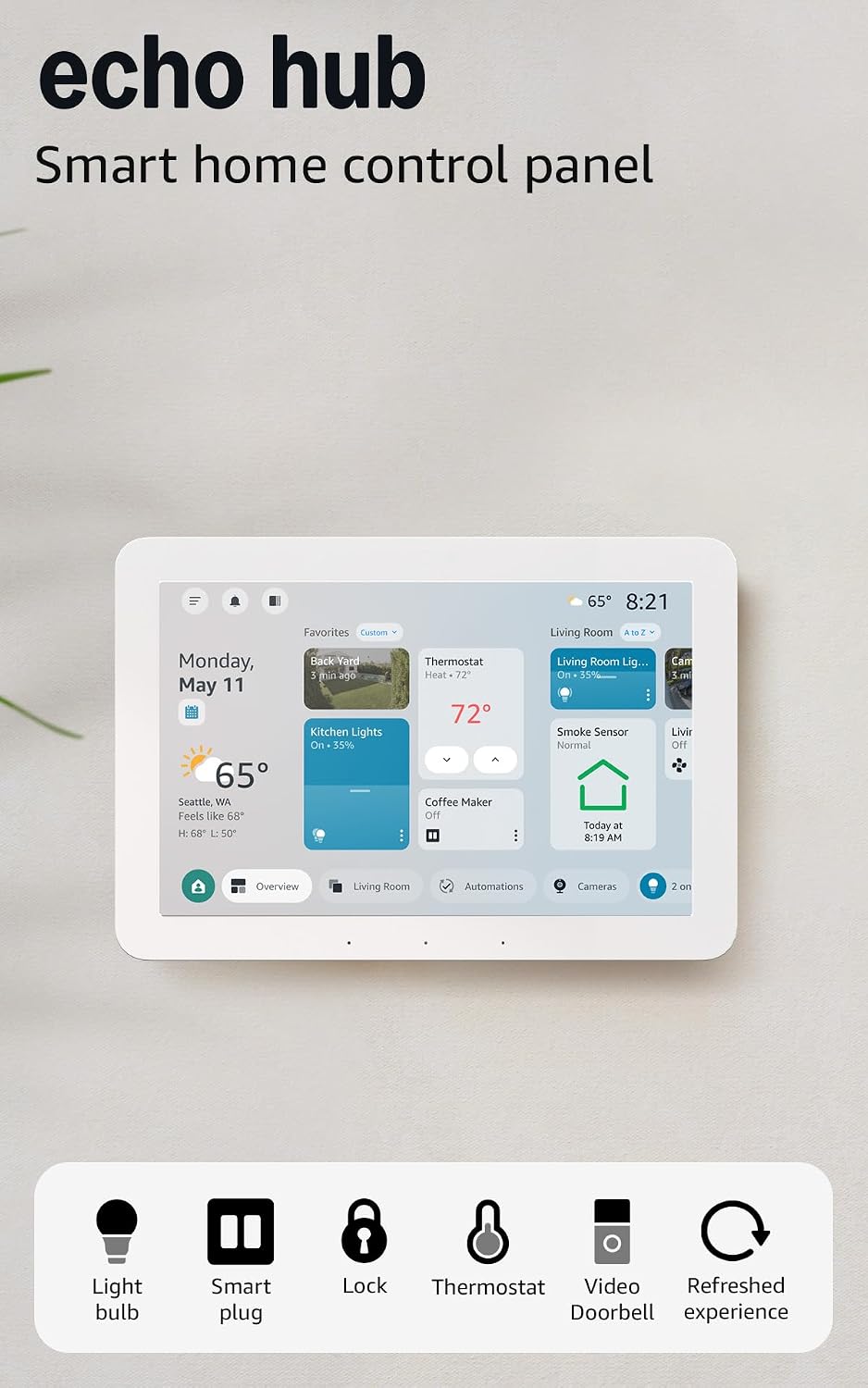
A smart home hub is the central brain of a connected-home setup — it’s the device that talks to your smart lights, locks, thermostat, sensors, and cameras and lets them work together as a single system instead of a pile of separate apps. Without one, you’re managing five ecosystems from five apps on your phone, and nothing talks to anything else. With the right hub, you can say “goodnight” and have the lights dim, the doors lock, and the thermostat drop — automatically. The catch: the box almost always overpromises. “Works with Alexa.” “Google Home compatible.” “Supports Matter.” These phrases are technically true in ways that are narrower than you’d expect. This guide cuts through that noise and ranks today’s leading hubs by what they actually control in a real home — not on a compliance checklist.
If you already have a dozen smart devices and you’re trying to consolidate them, or you’re mid-setup and hitting walls with devices that won’t talk to each other, this is the decision frame you need.
Why “Compatible” Is a Weasel Word — and What to Ask Instead
Here’s the friction point that catches most buyers: compatibility has layers. A hub can be “compatible” with a device class and still only support 60% of that class’s functions.
Take Zigbee, a short-range wireless protocol that runs on its own radio frequency — separate from your Wi-Fi — and powers a massive range of smart bulbs, sensors, and plugs from brands like IKEA, Sengled, and Third Reality. A hub might advertise Zigbee support, but if its Zigbee radio only handles 20 simultaneous devices and you have 35, you’ll get dropped connections and ghost automations. That’s a spec almost no marketing sheet leads with.
Then there’s Matter, the newer cross-brand standard backed by Apple, Google, Amazon, and the Zigbee Alliance (now the Connectivity Standards Alliance). Matter promises that a light bulb certified for one ecosystem just works in another. In practice, as The Verge’s 2025 reporting on Matter 1.3 documents, interoperability is improving but still uneven — especially for more complex device types like robot vacuums, garage door openers, and HVAC controllers that were added late to the standard.
The question to ask about any hub isn’t “does it support X?” It’s:
- How many devices of type X can it handle simultaneously?
- Does it support that device locally (on your home network) or does it route through the cloud?
- What happens to your automations if the manufacturer’s servers go down or the app gets discontinued?
That third question is why the Home Assistant community has exploded in the past two years, but more on that in a moment.
The Four Contenders Worth Your Attention in 2026
Amazon Echo Hub — The Generalist
Amazon’s dedicated smart home hub panel (a touchscreen controller that doubles as a display) is the most approachable entry point in this tier. TechRadar’s 2025 review notes its strength is breadth: Alexa’s device library is the largest in the consumer space, and the Echo Hub natively handles Zigbee, Z-Wave (another popular low-power protocol), and Matter all from one box, with Wi-Fi device management layered on top.
Where it earns its keep: casual to mid-complexity setups with mainstream brands — Philips Hue, Ring, Schlage, Ecobee, Amazon’s own smart plugs. Owners consistently report smooth initial setup and reliable voice control for everyday routines.
Where it hits its ceiling: local processing is limited. Most automations route through Amazon’s cloud servers, which means your “goodnight” routine depends on Amazon’s infrastructure being up. Wirecutter’s 2026 guide flags this as the most common complaint from power users who’ve run the Echo Hub for 18+ months — not performance, but the anxiety of cloud dependency. If Amazon changes its Alexa pricing model (which it has been exploring), your automation layer could cost more or behave differently next year.
Best fit: First integrated setup, renters, households already in the Amazon ecosystem.
Google Home Hub (Nest Hub Max) — Strong on Integration, Weaker on Breadth
Google’s flagship display hub has the most polished camera and video integration in this class — if you run Nest cameras, the experience is genuinely unified. For controlling third-party devices, though, the picture is more complicated. Ars Technica’s 2025 comparison of commercial hubs notes that Google’s Works With Google Home program is stricter than Amazon’s, meaning fewer niche or budget devices are certified.
The platform’s Matter support has improved significantly since version 1.2, and local processing for Matter devices is now on by default. But the Zigbee and Z-Wave gaps matter: Google’s hubs don’t have native radios for these protocols. You need a separate Zigbee bridge (like a Hue Bridge for Philips bulbs) or to rely on those devices connecting through Matter — which not all older devices support.
Owners who run a Google-heavy household (Android phones, Chromecast, Nest thermostats) report a tight, cohesive experience. Those with mixed ecosystems report friction at the edges.
Best fit: Households deep in Google/Nest hardware; Android-first users who want clean voice + display integration.
Apple HomePod (with Home App) — Privacy-First, Protocol-Second
Apple’s HomePod — used as a smart home hub rather than just a speaker — is the outlier in this comparison. Its privacy architecture is genuinely different: automations process locally, data stays off Apple’s advertising infrastructure, and end-to-end encryption covers device communications. CNET’s 2026 hub roundup consistently flags this as HomePod’s primary differentiator for privacy-conscious buyers.
The tradeoff is real: Zigbee and Z-Wave require bridges, support for non-Matter legacy devices is thinner than Amazon’s, and the ecosystem skews heavily toward premium-tier hardware (Eve, Lutron Caseta, ecobee). If you’re buying a $29 budget Zigbee plug, you’re more likely to get friction with HomePod than with the Echo Hub.
The platform’s automation logic — called Scenes and Automations in the Home app — is capable but less granular than Home Assistant. You can set “if door sensor opens after 10 PM, turn on hallway light,” but complex conditional logic requires workarounds.
Best fit: iPhone/Apple ecosystem households; buyers who prioritize data privacy over device breadth.
Home Assistant (on a Dedicated Device) — The Power User’s Answer
Home Assistant is open-source smart home software — free to run, community-maintained, and deeply extensible. You install it on dedicated hardware: the official Home Assistant Green ($99 as of 2026) or a more powerful Home Assistant Yellow (which includes a built-in Zigbee radio and runs ~$130) are the supported options. It also runs on a Raspberry Pi or a home server if you already have one.
What Home Assistant actually controls is functionally unbounded. Ars Technica’s 2025 deep-dive counted support for over 3,400 integrations — covering everything from budget Tuya Wi-Fi plugs to Lutron RadioRA 3 lighting systems to Tesla vehicles to Sonos speakers. Automations run entirely locally; your home keeps working if the internet goes down or if a cloud service shuts off.
The honest cost here is time and tolerance for troubleshooting. First-time setup is measured in hours, not minutes. Updates occasionally break integrations until the community patches them. Wirecutter’s 2026 guide explicitly positions Home Assistant as the right answer for buyers who want maximum control and are willing to invest in the learning curve — and the wrong answer for buyers who want to be done by Saturday afternoon.
Best fit: Technically comfortable buyers with 20+ devices, mixed ecosystems, or a specific device class (HVAC, security systems, commercial-grade hardware) no commercial platform supports cleanly.
By the Numbers
| Hub | Native Protocols | Cloud Dependency | Device Library Size | Setup Time (est.) |
|---|---|---|---|---|
| Amazon Echo Hub | Zigbee, Z-Wave, Matter, Wi-Fi | High (most automations) | ~100,000+ SKUs | 30–60 min |
| Google Nest Hub Max | Matter, Wi-Fi (no native Zigbee/Z-Wave) | Medium–High | ~50,000+ SKUs | 30–60 min |
| Apple HomePod | Matter, Wi-Fi (bridges required for Zigbee) | Low (local-first) | ~20,000+ SKUs | 45–90 min |
| Home Assistant Green/Yellow | Zigbee (Yellow), Z-Wave (add-on), Matter, Wi-Fi, 3,400+ integrations | Minimal (local) | Effectively unlimited | 3–8+ hours |
Device library estimates based on published certification databases and integration counts as of May 2026. Setup times reflect owner-reported averages across aggregated reviews.
The Real Compatibility Test: Protocol Depth, Not Protocol Name
Here’s the nuance that experienced buyers come back to after a few months with any commercial hub: it’s not whether the protocol is listed, it’s how many devices on that protocol the hub can handle before it starts dropping or lagging.
Zigbee networks, for example, use a “mesh” topology — devices relay signals to each other to extend range. A hub with a weak Zigbee implementation may struggle to maintain a stable mesh beyond 20–30 devices. Home Assistant with a quality Zigbee coordinator (the hardware radio stick) handles 100+ devices routinely, per long-run operator reports on Ars Technica forums and community documentation. The Amazon Echo Hub’s Zigbee implementation is solid for typical home setups (under 40 devices) but shows strain at higher device counts, based on aggregated owner reports reviewed by CNET.
Z-Wave is the other protocol worth flagging: it operates on a different frequency than Zigbee, avoids Wi-Fi interference, and has better range — making it the preferred protocol for door/window sensors, locks, and anything in a thick-walled home. Amazon and Home Assistant both handle Z-Wave. Google and Apple do not, natively.
The Decision Frame: If X, Then Y
This is the buyable choice matrix, stated plainly:
If your home runs fewer than 25 devices, you’re in the Amazon or Google ecosystem already, and you don’t want to spend a weekend on setup — the Echo Hub earns its price. It’s the broadest generalist, and its limitations won’t surface at modest scale.
If you’re iPhone-first, run premium hardware brands, and data privacy is a non-negotiable — Apple HomePod’s local-processing architecture is worth the narrower device compatibility. Budget Zigbee devices may not fit cleanly; plan accordingly.
If you need Google’s video integration specifically — Nest cameras and Nest thermostats in a single interface — the Nest Hub Max delivers that better than anyone else. Accept the protocol gaps and bridge where needed.
If you have 30+ devices, mixed brands, any legacy hardware, or any device class that commercial platforms don’t support cleanly — Home Assistant is the correct long-term answer. The setup investment is real, but owners consistently report that after the initial configuration, it’s the most stable and flexible option they’ve run. The math on total cost of ownership also favors it: no subscription fees, no platform-discontinuation risk, no cloud dependency.
The box doesn’t tell you any of this. Now you know what to ask.