May 30, 2026 • Sanjay Gupta • 10 min reading time • Prices verified June 24, 2026
Amazon Echo Show vs. Google Nest Hub: Which Smart Display Earns Its Counter Space
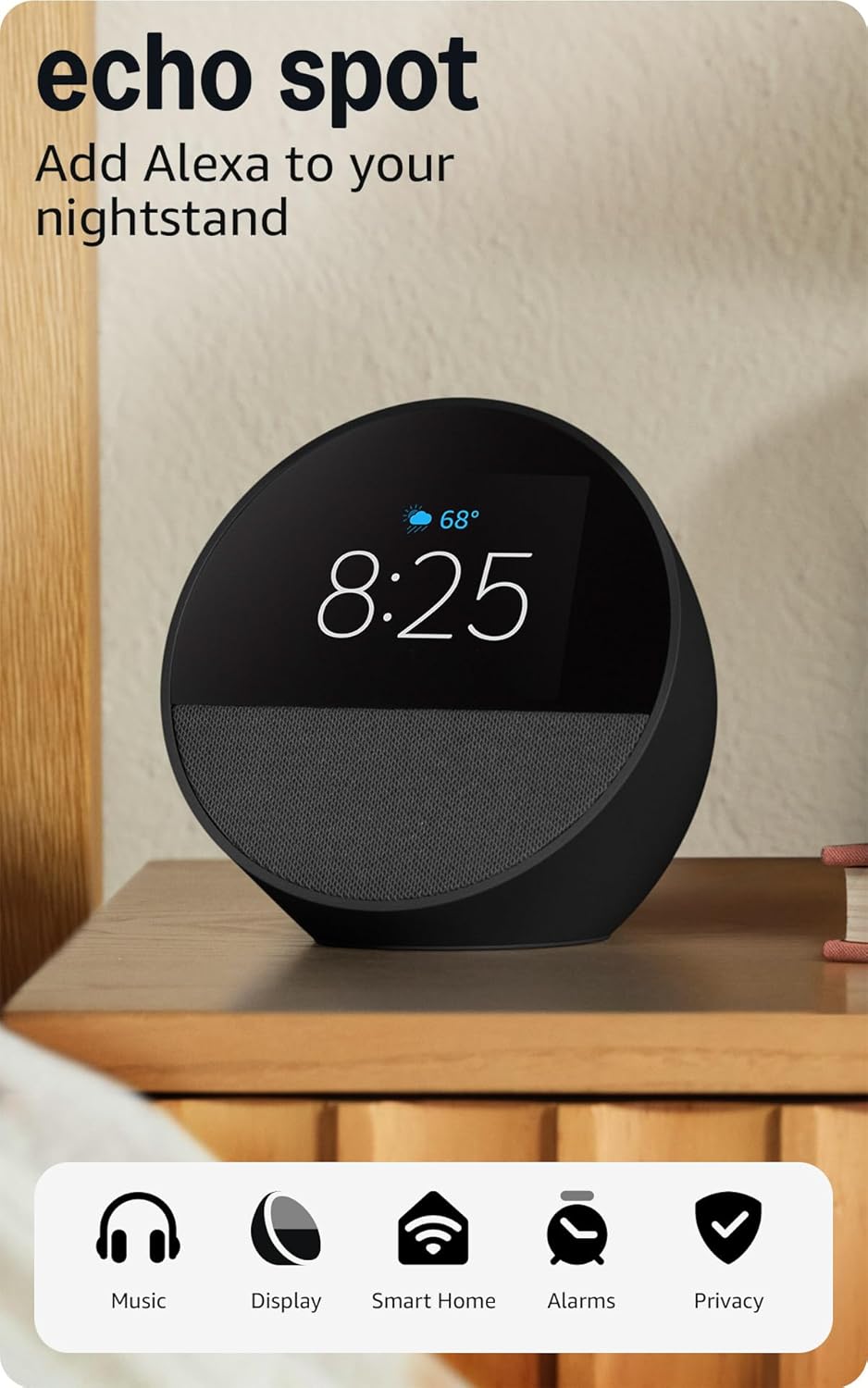
A smart display is exactly what it sounds like: a touchscreen tablet fused with a voice assistant, permanently plugged in and always ready. Think of it as the middle ground between a smart speaker (audio-only, no screen) and a tablet (portable, but you have to pick it up). You talk to it, tap it, or both. It shows you weather, plays video, controls smart-home devices like lights and locks, and — in the kitchen especially — keeps a recipe visible without you touching your phone with floury hands. The two products that dominate this category in 2026 are Amazon’s Echo Show line (powered by Alexa) and Google’s Nest Hub line (powered by Google Assistant). Both cost somewhere between $80 and $230 depending on screen size, both do the core job, and both have real weaknesses. This guide breaks down what matters for counter and nightstand use, names the tradeoffs clearly, and ends with a straight decision rule so you can move on.
What You’re Actually Choosing Between
Before diving into specs, it helps to understand the ecosystem lock-in underneath both products — because that’s the real decision, not the screen size.
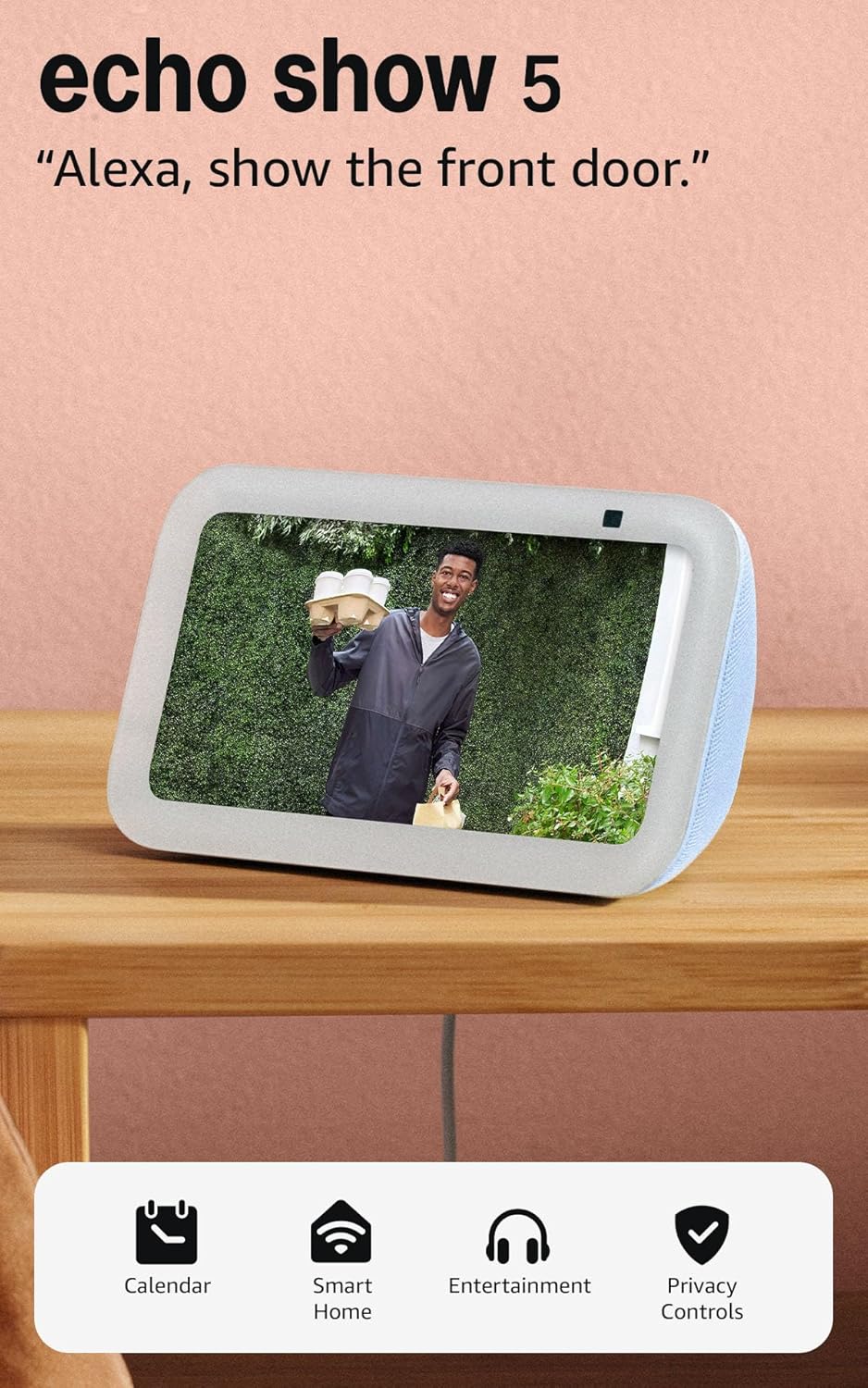
Amazon Echo Show lives inside the Alexa ecosystem. If you already own Ring cameras, Alexa-compatible smart bulbs, Fire TV devices, or shop heavily on Amazon, the integration is nearly seamless. Alexa’s third-party smart-home device support is broader by raw count — The Verge’s ongoing Echo Show coverage consistently notes that Alexa connects to more device types out of the box than any competing assistant. The Echo Show line runs from the compact Echo Show 5 (5.5-inch screen, typically around $90) up through the Echo Show 8 (8-inch, around $150) and the flagship Echo Show 10 (10.1-inch, motorized rotating display, around $230).
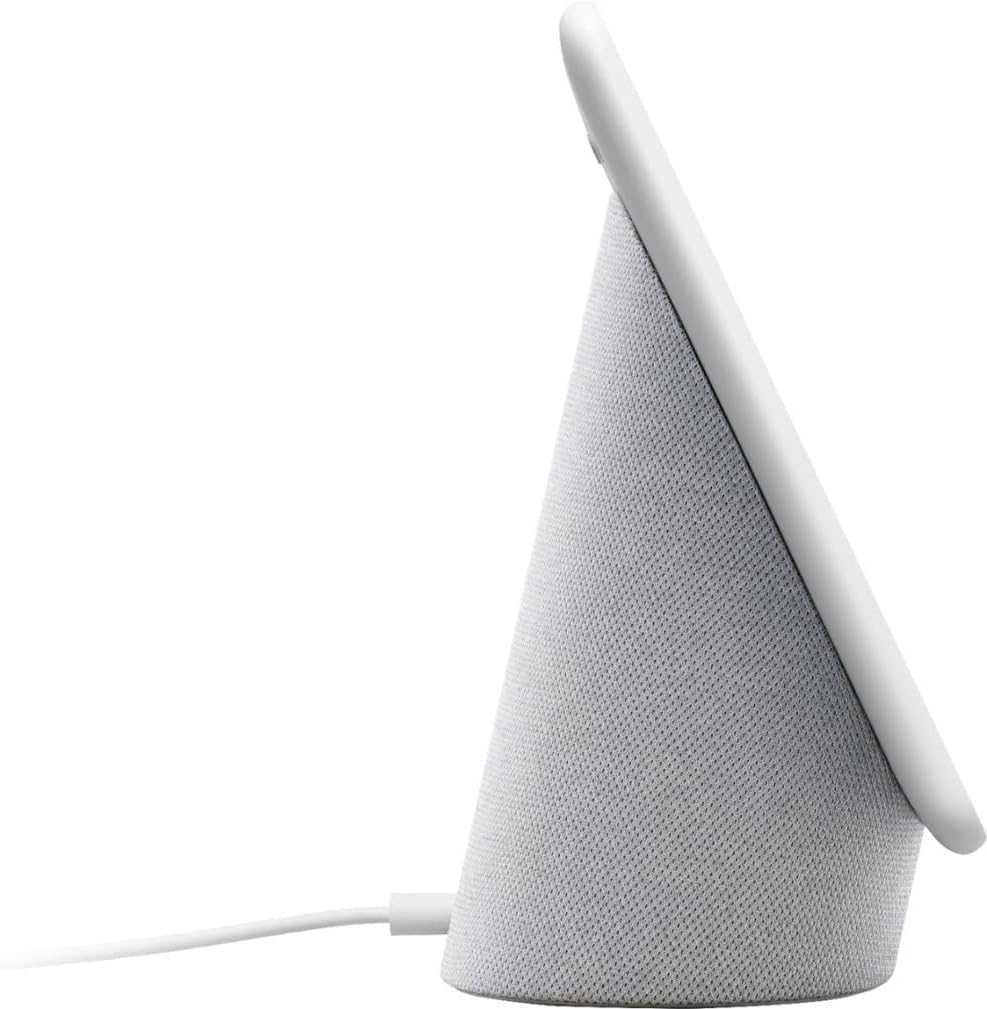
Google Nest Hub runs Google Assistant and integrates tightly with Android phones, Google Calendar, Google Photos, YouTube, and Google Home-compatible devices. If your phone is Android, your calendar is Google, and your smart-home devices carry the “Works with Google Home” badge, the Nest Hub’s value proposition sharpens considerably. The lineup is simpler: the standard Nest Hub (2nd Gen) at 7 inches (typically around $100) and the Nest Hub Max at 10 inches (around $230).
The ecosystem question is the biggest fork in the road. Wirecutter’s guide “The Best Smart Displays” explicitly frames the choice this way: pick Amazon if Alexa is already your household voice; pick Google if your digital life runs through Google services.
Head-to-Head: The Numbers
Mid-range models compared
| Feature | Echo Show 8 (3rd Gen) | Nest Hub Max |
|---|---|---|
| Screen size | 8 in, 1280×800 | 10 in, 1280×800 |
| Built-in camera | 13 MP | 6.5 MP |
| Price (MSRP, May 2026) | ~$150 | ~$230 |
| Sleep tracking | No | Yes (radar-based, no camera) |
| Rotating display | No | No |
| Video calls | Alexa/Zoom | Google Meet |
Amazon
$49.99
In stock on Amazon
Check price on AmazonThe camera gap is real but contextual. The Echo Show 8’s 13 MP camera is noticeably better for video calls. CNET’s “Google Nest Hub Max Review” describes the Nest Hub Max’s 6.5 MP camera as adequate for casual use but notes it trails competitors at the same price point, while TechRadar’s “Amazon Echo Show 8 Review” calls the 13 MP sensor a meaningful upgrade for drop-in calls and video chat. If video calling is a primary use case, Amazon wins this row.
The sleep tracking row flips the table for bedroom buyers. The Nest Hub 2nd Gen uses Google’s Soli radar chip — a motion-sensing technology that detects breathing and movement without a camera — to passively track sleep without anything pointed at your bed. Ars Technica’s feature “Google Nest Hub Sleep Tracking Deep Dive” describes the accuracy as genuinely useful for spotting trends across weeks, while noting clearly it is not a medical device. No Echo Show model offers anything comparable.
Where Each One Pulls Ahead
H3: Kitchen Use — Echo Show
For kitchen counter use, the Echo Show 8 is the more polished product. Owners consistently report that Alexa’s hands-free recipe workflow — keeping steps on screen, letting you advance by voice, integrating with grocery list apps — is smoother than the Google equivalent. Amazon has clearly prioritized the kitchen as a primary use case, and RTINGS.com’s display measurement data shows the Echo Show 8’s screen handles harsh overhead lighting at brightness levels that beat several comparably priced competitors including the Nest Hub Max.
Amazon’s video call story also matters more in a kitchen context. The Echo Show’s Drop In feature — essentially an instant intercom between Echo devices in the same household — has no direct Google equivalent. Multi-room households with Echo devices in the kitchen and bedroom find this legitimately useful day-to-day.
One honest caveat: Alexa’s ambient advertising friction is a known and documented irritant. Long-run owners note that Alexa occasionally surfaces promotional suggestions unprompted. Amazon has adjusted this behavior through multiple software updates since 2024, but it has not disappeared entirely. If unprompted upsell moments will bother you, weight this in your decision.
Amazon
$49.99
In stock on Amazon
Check price on AmazonH3: Bedroom Use — Nest Hub
For the nightstand, the Nest Hub 2nd Gen is the more considered product for one reason that overrides most others: it has no camera. The standard Nest Hub 2nd Gen omits the camera entirely — a deliberate design choice that Google has leaned into as a privacy feature for bedroom placement. The Nest Hub Max includes a camera, but the standard model does not, and most buyers putting a smart display on a nightstand correctly prefer no lens pointed at the bed.
Add the radar-based sleep tracking, and the case gets stronger. For buyers already in the Google ecosystem — Android phone, Google Calendar, YouTube Music — the bedside Nest Hub becomes a genuinely useful sleep and wake routine hub: ambient display of a morning calendar, sleep data that syncs to Google Fit, and no camera watching you sleep. The Verge’s review coverage of the standard Nest Hub 2nd Gen has consistently described the absence of a camera as an actual selling point rather than a compromise for the bedroom use case.
The Nest Hub’s ambient equalizer, which automatically adjusts audio output based on detected room acoustics, is a nice bonus. In bedroom use cases where the primary requests are alarms and light controls, it is a secondary consideration rather than a deciding one.
Amazon
$44.99
In stock on Amazon
Check price on AmazonH3: Smart Home Control — Ecosystem Depth
Both devices support Matter, the industry-standard smart home protocol launched in 2022 and now the dominant integration standard as of 2026. In theory, Matter levels the playing field. In practice, the Alexa ecosystem still carries broader legacy device support — meaning if you have older smart-home hardware that predates Matter, Amazon is more likely to support it natively. Wirecutter’s “The Best Smart Displays” guide notes that Alexa’s routine-building tools remain more granular than Google’s for users managing complex multi-device automations.
Google Home has improved substantially since the Home app rebuild in 2023–2024. TechRadar’s ongoing Google Home ecosystem coverage describes the current experience as finally competitive, though it acknowledges that Alexa still leads in raw legacy device compatibility numbers. If you are starting a smart home from scratch with all-Matter hardware, this gap narrows significantly and the choice defaults back to whichever voice ecosystem you already use on your phone.
$269.97
In stock on Amazon
Check price on AmazonThe Privacy Calculus
This deserves its own section because it is often underdiscussed in spec-focused comparisons.
Both devices are always-on microphones in your home. Both companies have faced scrutiny over voice recording storage practices. Amazon and Google both offer voice history deletion tools and opt-out controls for human review of recordings — these settings exist in the Alexa app and Google Home app respectively, but they require active configuration. The default states in both ecosystems are permissive rather than restrictive.
The camera-in-bedroom concern is real. The Echo Show 5, 8, and 10 all include cameras. If you place an Echo Show on a nightstand, you are placing a 13 MP camera in a bedroom. Amazon includes a physical camera shutter on the Echo Show 5, but the Echo Show 8 and 10 do not include a physical shutter as of current production runs, according to product specification pages and CNET’s hands-on coverage. Long-run Echo Show 8 reviews note that owners frequently mention this as a mental friction point even when the camera is not actively in use.
For bedroom placement specifically, the no-camera Nest Hub 2nd Gen’s privacy story is simply cleaner and requires less active management.
Total Cost of Ownership
Neither device carries a mandatory subscription for core functionality. But both ecosystems have optional subscription layers that change the value equation:
- Amazon: Core Alexa features are free. Amazon Music Unlimited (approximately $11/month), Ring Protect plans for Ring camera owners, and Alexa Guard Plus (approximately $5/month for advanced home security monitoring) are all optional upsells that extend functionality meaningfully.
- Google: Google Assistant features are free. YouTube Premium (approximately $14/month) removes ads from YouTube video playback on the Nest Hub display and unlocks background audio — without it, YouTube on the Nest Hub screen runs full advertisements. Google One subscriptions affect Photos storage, which powers the ambient photo display feature many buyers consider a key reason to own a Nest Hub.
Neither subscription stack is required, but YouTube without Premium on a Nest Hub screen is a noticeably degraded experience compared to YouTube with it. Factor this in if YouTube playback is a primary intended use case.
The Decision Rule
If you are still deciding, here is the framework:
If your home already runs on Alexa — Echo speakers, Ring cameras, Fire TV, established Alexa routines — buy the Echo Show 8. It is the better video call device, the better kitchen display, and the natural extension of infrastructure you have already committed to. The Echo Show 8 hits the best price-to-screen-size ratio in the current Echo lineup.
If you are placing a display in a bedroom, and especially if you use Android with a Google ecosystem, buy the Nest Hub 2nd Gen rather than the Nest Hub Max. Save the price difference and keep the no-camera advantage that makes the standard model the right bedroom product. The sleep tracking is genuinely useful, the camera-free design is appropriate for the space, and at approximately $100 it is the lower-risk entry point into either ecosystem.
If you are starting from scratch with no existing ecosystem investment, lean Google for a bedroom device and Amazon for a kitchen device. They are not mutually exclusive, and at these price points, buying one of each is a reasonable way to evaluate both before committing to deeper ecosystem purchases like cameras, doorbells, or whole-home speaker setups.
If the primary use case is smart-home control of a large, established setup with legacy pre-Matter devices, Amazon’s device compatibility breadth still justifies the ecosystem choice even for buyers who might otherwise prefer Google.
The one scenario where neither earns a strong recommendation: if you do not already use voice assistants habitually and are not invested in a smart home ecosystem, the honest answer is that a modest digital photo frame and a phone alarm will serve the same ambient display and wake routine functions for considerably less money. Smart displays earn their counter space when they anchor an ecosystem, not when they sit on a shelf as standalone gadgets.