June 3, 2026 • Sanjay Gupta • 12 min reading time • Prices verified June 24, 2026
Portable Bluetooth Speakers $30 to $300: JBL Go 4 vs. Flip 7 vs. Bose SoundLink vs. Marshall Emberton
A portable Bluetooth speaker is exactly what it sounds like: a self-contained wireless speaker you can carry anywhere, pairing to your phone or tablet over Bluetooth — a short-range radio standard built into virtually every device made after 2010. No cords, no wall outlet required. The market runs from a $30 clip-on you’d toss in a beach bag all the way to $300 statement pieces that fill a campsite or a hotel room with genuinely impressive sound. If you’ve been researching this category for more than ten minutes, you’ve already noticed that price doesn’t always predict quality in a straight line — a $50 JBL can outperform a $150 no-name brand, and a $130 Marshall can sound richer than some $200 competitors. This article maps the real tradeoffs across six speakers that represent the major decision points in the $30–$300 range: the JBL Go 4, JBL Flip 7, Bose SoundLink Flex 2, Bose SoundLink Max, Marshall Emberton III, and Sony ULT Field 5. By the end, you’ll have a clear decision rule — not just a spec list.
| EDITOR'S PICKBose SoundLink Max Bluetooth Sp… | Mid-tierBose SoundLink Flex Bluetooth S… | Budget pickJBL Go 4 - Ultra-Portable | |
|---|---|---|---|
| Battery life | 20 hours | 12 hours | 7 hours |
| AUX Input | ✓ | — | — |
| USB-C | ✓ | ✓ | — |
| Carry handle | ✓ | — | — |
| Price | $279.00 | $99.00 | $37.95 |
| See on Amazon → | See on Amazon → | See on Amazon → |
The Lineup and What Each One Actually Costs You
Before comparing sound, it helps to understand what you’re really buying at each tier.
JBL Go 4 (~$35): Maximum Portability, Real Limitations
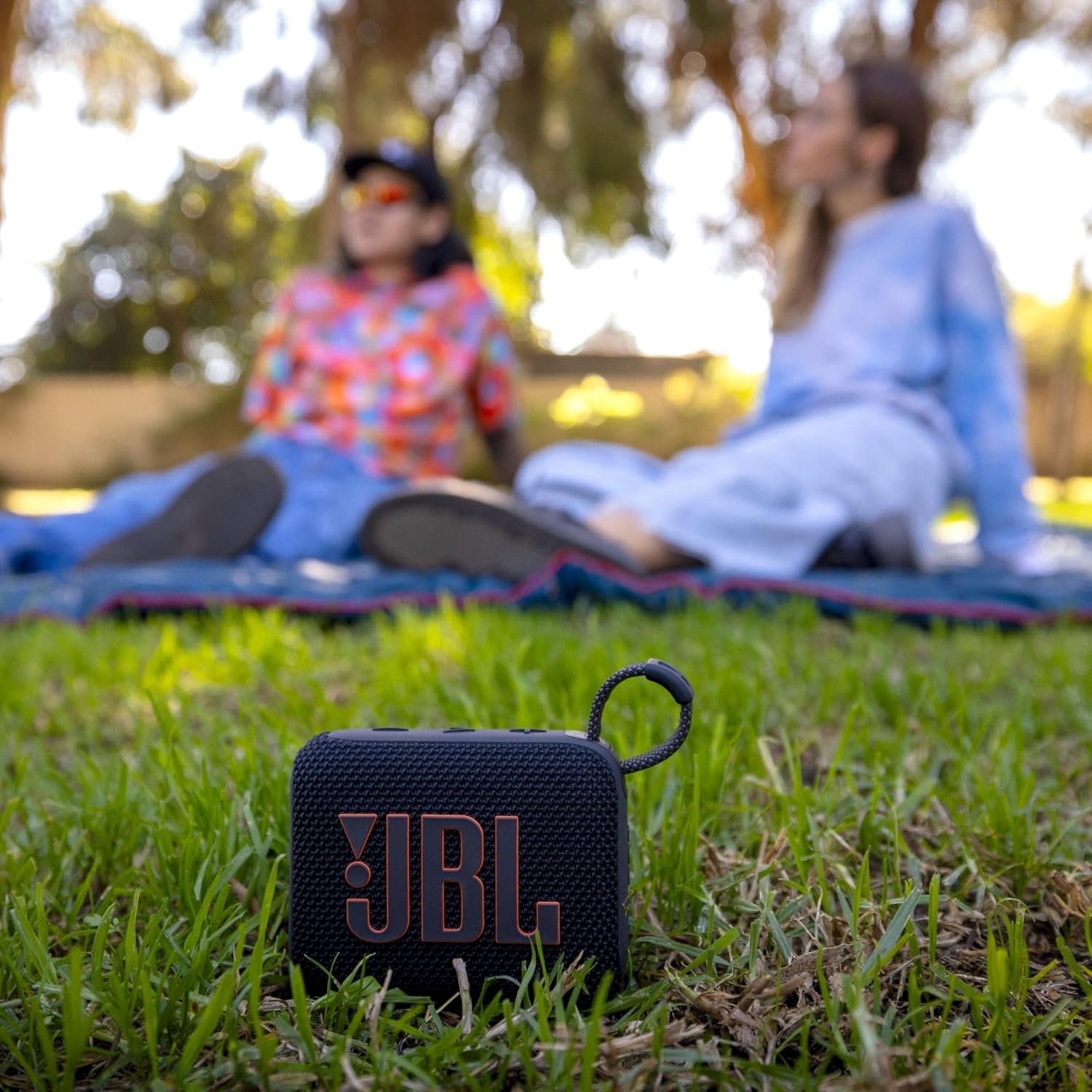
The JBL Go 4 is the smallest speaker here — roughly the size of a hockey puck. JBL rates it for IP67 water and dust resistance (IP67 means it can be submerged in up to one meter of water for 30 minutes), and CNET’s “Best Portable Bluetooth Speakers for 2025” roundup consistently highlights the size-to-volume ratio as genuinely surprising for the price. Battery life is rated at 7 hours, and the range of available colors — particularly bolder options like purple — drives impulse purchases at this price point. Owners repeatedly mention color as a deciding factor.
JBL
$37.95
In stock on Amazon
Check price on AmazonJBL Flip 7 (~$130): The Default Answer for Most Buyers
The JBL Flip 7 is the step-up cylindrical workhorse. At this price, you’re getting a significantly louder, fuller sound than the Go 4, plus JBL’s PartyBoost feature, which lets you link multiple compatible JBL speakers together either in stereo mode or in Party mode for additional volume. Wirecutter’s “The Best Portable Bluetooth Speaker” (updated 2025) places the Flip lineage in its default-recommendation position, and owner sentiment from long-run reviews backs up two practical details the marketing materials underplay: the button layout is unusually intuitive with gloves on, and the cylindrical shape fits snugly in a standard water bottle cage on a bike — a detail that has made it a genuine cycling companion. Battery is rated at 14 hours.
Bose
$99.00
In stock on Amazon
Check price on AmazonBose SoundLink Flex 2 (~$149): Voice Content and Versatility
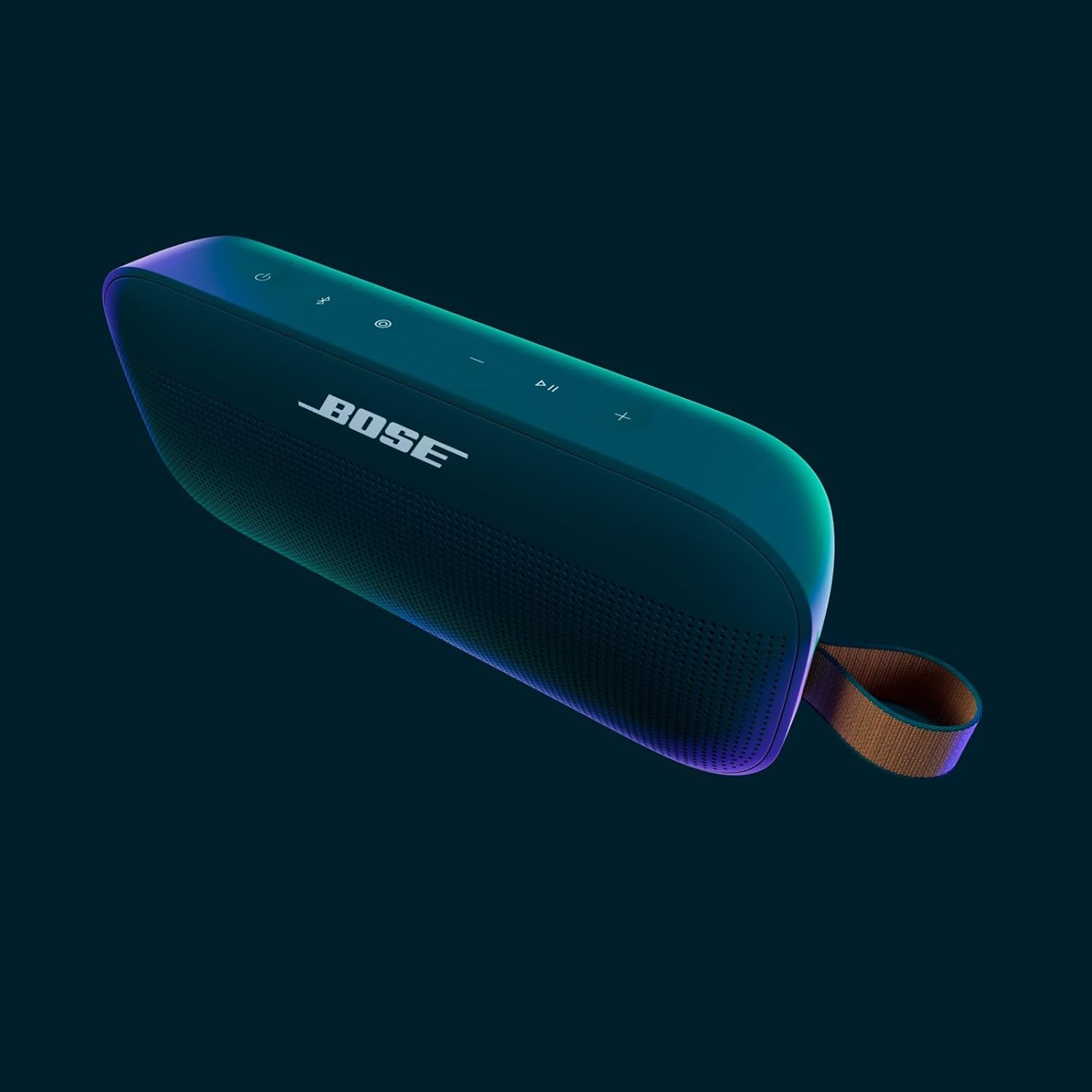
The Bose SoundLink Flex 2 targets the utility-first buyer. The Verge’s “Bose SoundLink Flex 2 Review” (2025) notes the rugged, positionable design and describes the sound as notably balanced for its size. What stands out from owner data is the use pattern: a meaningful portion of long-term owners report using it primarily for audiobooks and podcasts rather than music, suggesting Bose has engineered speech intelligibility — the clarity of the human voice — to a noticeably high standard. The speaker is IP67-rated and includes Bose’s PositionIQ technology, which uses internal sensors to detect the speaker’s orientation and adjust the EQ accordingly, making it one of the more versatile picks for moving between surfaces and positions.
Bose
$99.00
In stock on Amazon
Check price on AmazonMarshall Emberton III (~$130): The Audiophile-Adjacent Choice
The Marshall Emberton III is the warm-sounding alternative at the same price tier as the Flip 7. TechRadar’s “Marshall Emberton III Review” (2025) describes it as delivering a richer, warmer low-end profile compared to JBL’s typically brighter tuning. Owners who have used JBL and Bose products simultaneously draw direct comparisons and describe the Marshall as “richer” — that word recurs consistently in long-run owner accounts. One important owner-sourced warning: if you store the Emberton III for several months without use, the battery can fail permanently. This is unusually specific and actionable — if you’re a seasonal user, charge the speaker to roughly 50% before long storage and connect it to power at least every 60 days. Battery is rated at 30 hours under normal use. Weight comes in at approximately 700g, heavier than the Flip 7.
Bose
$99.00
In stock on Amazon
Check price on AmazonSony ULT Field 5 (~$230): Raw Impact with a Mode Switch
The Sony ULT Field 5 introduces a feature the others lack: a dedicated ULT mode. ULT mode is a bass-boost setting that pushes the low end hard — owners consistently report that you feel the bass as much as hear it, describing it as a physical, tactile experience. The tradeoff is Stamina mode, which applies a more conservative EQ profile and extends battery life substantially. Sony rates the ULT Field 5 at up to 30 hours in Stamina mode versus around 16 hours with ULT active. RTINGS’ speaker measurement methodology, as outlined in their “JBL Flip 7 Review” (2025) and applied consistently across their speaker coverage, shows that real-world battery gaps of this magnitude translate into meaningful differences in how often you’re reaching for a charger. At 1,900g, the ULT Field 5 is heavy — this is a campsite-arrival speaker, not a trail speaker.
Bose
$279.00
In stock on Amazon
Check price on AmazonBose SoundLink Max (~$299): When You Need to Fill a Room
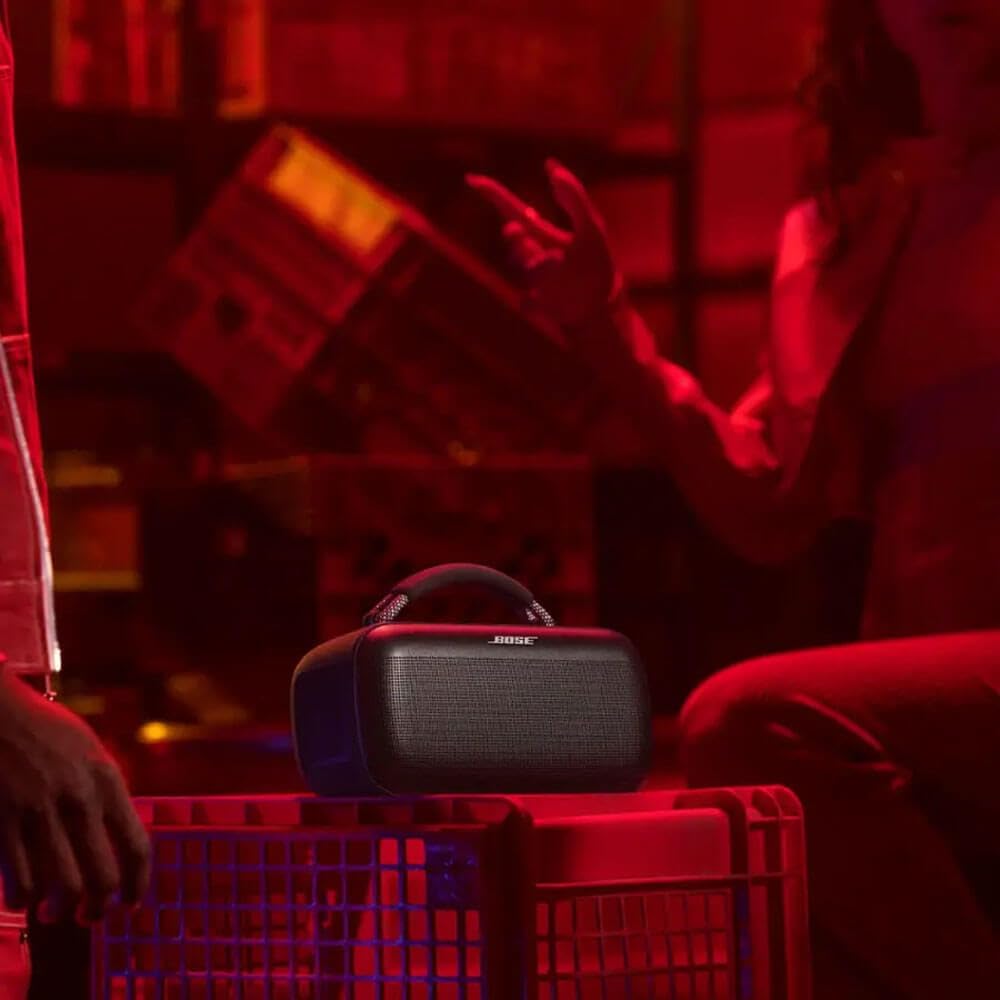
The Bose SoundLink Max is the premium end of this comparison. It is larger, louder, and priced accordingly. TechRadar’s speaker coverage places it in the category of speakers competing with home bookshelf units in terms of output — but at approximately 1,320g (just under 3 pounds), it is the second-heaviest portable option here and the most expensive by a significant margin. Battery is rated at 20 hours. Worth it if you need to fill outdoor spaces or large rooms; harder to justify if you’re counting grams or dollars.
Bose
$279.00
In stock on Amazon
Check price on AmazonBy the Numbers
| Speaker | Approx. Price | Battery Life (rated) | Weight | IP Rating |
|---|---|---|---|---|
| JBL Go 4 | ~$35 | 7 hrs | 209g | IP67 |
| JBL Flip 7 | ~$130 | 14 hrs | 550g | IP67 |
| Bose SoundLink Flex 2 | ~$149 | 12 hrs | 590g | IP67 |
| Marshall Emberton III | ~$130 | 30 hrs | 700g | IPX7 |
| Sony ULT Field 5 | ~$230 | 16–30 hrs | 1,900g | IP67 |
| Bose SoundLink Max | ~$299 | 20 hrs | 1,320g | IP67 |
Sound Signature, Real-World Volume, and Who Each Speaker Is For
The most useful way to think about sound in this category isn’t watts or frequency response charts — it’s tuning philosophy. JBL speakers are tuned bright and punchy, which means vocals and treble cut through clearly, especially outdoors. This makes the Flip 7 excellent for fast-moving music in open environments but can feel slightly fatiguing over long listening sessions indoors.
The Marshall Emberton III is tuned warmer — more low-mid energy, a fuller bottom end. Wirecutter’s “The Best Portable Bluetooth Speaker” (updated 2025) has historically noted Marshall’s distinct tuning as a meaningful differentiator in this category, and owner reviews back this up: people who listen to classic rock, jazz, and acoustic music gravitate toward it, while pop and electronic music listeners often prefer the JBL brightness. Neither is objectively better — they reflect different engineering priorities and different listener preferences.
Bose lands in the middle with a more neutral, balanced profile. The SoundLink Flex 2’s speech clarity advantage is not accidental — Bose has engineered it for voice content, and the PositionIQ system helps maintain that profile whether the speaker is on its side, upright, or lying flat. For the daily utility listener — the person who puts on a podcast while cooking or an audiobook while doing yard work — the Flex 2 earns its price not through audiophile credentials but through consistent, fatigue-free performance across a full day.
The Sony ULT Field 5 occupies its own category for raw impact. In ULT mode, owners consistently report that bass is felt as much as heard. This is not the speaker for a hotel room at 11pm — it is the speaker for an outdoor cookout or a job site. In Stamina mode, it becomes a much more civilized listen at the cost of the visceral low end that makes ULT mode distinctive. If you only want one of those modes, you are probably over-buying for your use case.
On volume: the gap between the JBL Go 4 and the Flip 7 is significant enough to matter in practice. The Go 4 can fill a small room or a quiet outdoor space. The Flip 7 can compete with ambient noise — traffic, wind, crowd chatter. RTINGS’ speaker measurement data, as applied in their “JBL Flip 7 Review” (2025), shows a meaningful gap in maximum output between compact and mid-size speakers in this class, and owner sentiment consistently describes the jump from Go 4 to Flip 7 as “not subtle.”
The Tradeoffs That Actually Drive the Decision
Every one of these speakers makes a specific tradeoff. You should buy the one whose tradeoff you can live with.
The JBL Go 4 trades output and battery life for portability and price. Worth it if your use case is travel, desk use, or fitting in a bag where size is the hard constraint.
The JBL Flip 7 trades the Go 4’s extreme portability for real-world loudness, longer battery, and bike-mount utility. It is the default recommendation for most buyers in this category, and Wirecutter’s “The Best Portable Bluetooth Speaker” (updated 2025) reflects this consensus — the Flip lineage consistently earns its default-pick status across major review outlets.
The Bose SoundLink Flex 2 trades JBL’s brightness for speech clarity, durability, and PositionIQ flexibility. Worth the slight premium over the Flip 7 if your listening skews toward voice content or you want something you can use confidently in wetter, more varied conditions.
The Marshall Emberton III trades weight and storage-battery reliability for a noticeably richer sound signature. Right for the music-first buyer who listens indoors as often as outdoors and will not leave it on a shelf for six months.
The Sony ULT Field 5 trades portability for raw impact. At nearly two kilograms, it is not a hiking speaker — it is a campsite-arrival speaker that you plant and leave running. For multi-mile trail carries, the JBL Flip 7 is the better fit.
The Bose SoundLink Max trades the entire “portable” promise for room-filling sound in a weather-resistant shell. If you’re spending $300, you should have a clear reason you need this much speaker. If you do, it delivers.
Frequently Asked Questions
Can I pair two JBL speakers together for stereo sound? Yes — JBL’s PartyBoost feature, available on the Flip 7 and other compatible JBL speakers, lets you pair two speakers in stereo mode (left channel and right channel) or in Party mode (both playing the same audio for more volume). The JBL Go 4 does not support PartyBoost — it uses an older, incompatible linking system. Confirm compatibility on both units before buying a pair.
Does the Bose SoundLink Flex 2 float if dropped in water? No, it does not float — but it is IP67-rated, meaning it survives submersion up to one meter for 30 minutes. The Verge’s “Bose SoundLink Flex 2 Review” (2025) confirms the speaker handles accidental water contact confidently, but it will sink if dropped in a lake. It is not designed as a flotation device.
Will the Marshall Emberton III battery die if I don’t use it for months? This is a documented risk worth taking seriously. Long-run owner accounts describe the battery failing to hold a charge or failing to power on after extended storage without use. The actionable advice from the owner community: charge to approximately 50% before long-term storage and connect it to power at least every 60 days. If you’re a seasonal user, set a calendar reminder.
What is the actual volume difference between the JBL Go 4 and the Flip 7? The difference is substantial in real-world conditions. The Go 4 performs well in quiet environments — a bedroom, a kitchen, a small patio with no ambient noise. The Flip 7 can compete with moderate background noise: traffic, wind, outdoor gatherings. RTINGS’ speaker measurement methodology, as documented in their “JBL Flip 7 Review” (2025), shows a meaningful gap in maximum output between compact and cylindrical mid-size speakers in this class.
Is the Sony ULT Field 5 too heavy to carry on a hike? At approximately 1.9 kilograms (about 4.2 pounds), it is heavy for a day hike if you’re also carrying water, food, and gear. Owners who bring it hiking describe it as a deliberate, strap-required commitment. For car camping or site-to-site travel, the weight is much less of a concern. For a multi-mile trail carry, the JBL Flip 7 is the more practical fit.
Does the Bose SoundLink Max require the Bose app to work? No. The SoundLink Max works as a standard Bluetooth speaker without any app. The Bose Connect app (available on iOS and Android) unlocks additional features like EQ customization, firmware updates, and device management — but basic playback requires only a Bluetooth connection. The app is optional, not required.
The Decision Rule
If your budget is under $50 and size is the primary constraint: JBL Go 4.
If you want the best all-around portable speaker under $150 for music, outdoor use, or bike commuting: JBL Flip 7 — it’s the default answer for a reason.
If you listen to podcasts and audiobooks more than music, or want something you can genuinely neglect in wet conditions: Bose SoundLink Flex 2 at the same price tier is worth the extra ~$20 over the Flip.
If sound quality matters more than raw loudness and you won’t leave it in a drawer for six months: Marshall Emberton III.
If you want maximum bass impact for outdoor gatherings and don’t mind the weight: Sony ULT Field 5.
If you need to fill a large outdoor space and have the budget: Bose SoundLink Max — but ask yourself honestly whether you’ll move it often enough to justify the size and price.
The honest version of this market: the $130 tier — the Flip 7 and the Emberton III — delivers the best price-to-performance ratio in the entire range. Above that, you’re paying for size, prestige, or specific use cases. Below it, you’re accepting real limitations in exchange for real convenience. Neither tradeoff is wrong — but now you know which one you’re making.