June 8, 2026 • Sanjay Gupta • 9 min reading time • Prices verified June 24, 2026
Your First Serious Mirrorless Camera: How to Spend $500–$2,000 Without Buying the Wrong Sensor Size
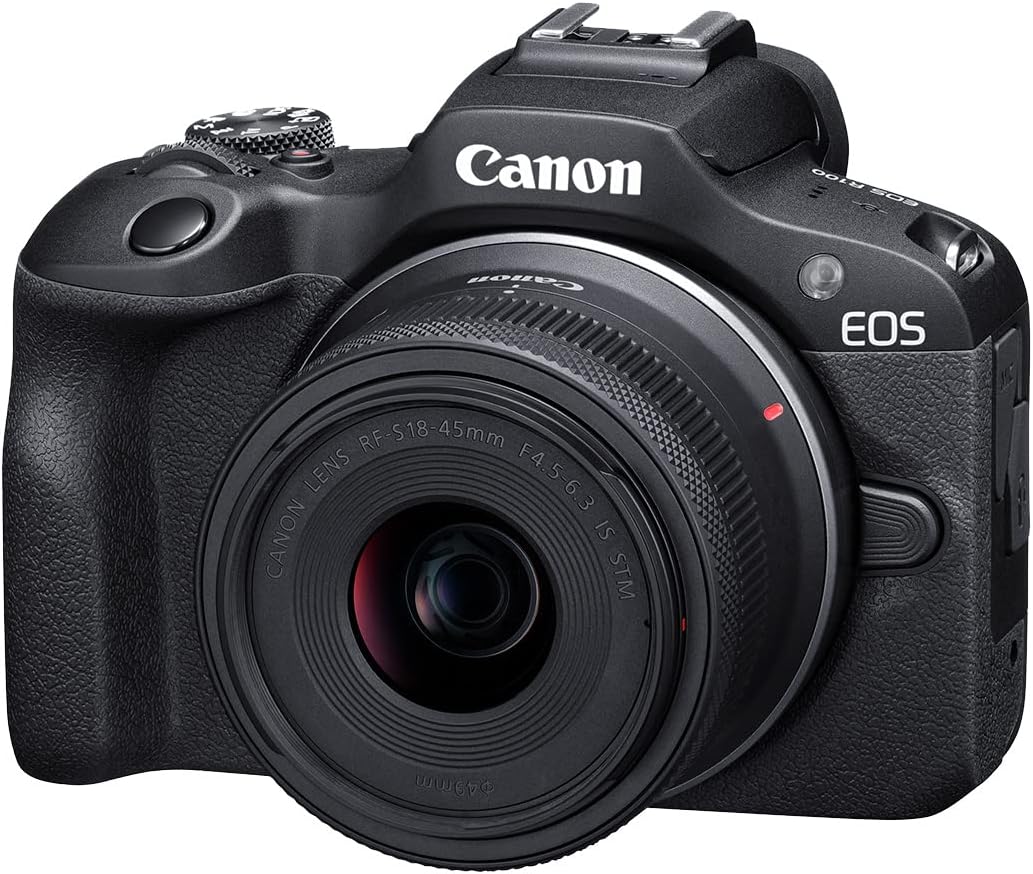
A mirrorless camera is a digital camera that captures photos and video without the internal mirror mechanism found in older DSLR (Digital Single-Lens Reflex) cameras — the mirror is what made those cameras big and loud. Without it, bodies get lighter and quieter, autofocus gets faster, and the viewfinder goes electronic. The result is a category that now dominates serious photography at every price point from around $500 to well over $3,000. If you’re stepping up from a smartphone or a basic point-and-shoot and you want a camera that will still feel capable five years from now, mirrorless is the right direction. What this guide will settle for you — before you spend anything — is the single decision that locks every future purchase: sensor size. Get that wrong and the lenses you buy today may be worthless on the camera you want in two years.
Why Sensor Size Is Actually a Lens-Mount Decision in Disguise
Here’s the part most buying guides bury in footnote language: the sensor size determines the lens ecosystem you’re joining, not just the image quality of the body you’re buying today.
Each sensor format uses a proprietary mount — a physical connection point between the camera body and the lens. Lenses designed for one mount generally don’t work natively on another. So when you buy a Sony APS-C body (APS-C is a sensor roughly 60% the size of a 35mm film frame — sometimes called a “crop sensor”), you’re also quietly committing to the Sony E-mount lens library. That library is enormous and excellent. But if you later upgrade to a full-frame Sony body, your APS-C lenses still work — which is a real advantage of Sony’s ecosystem design.
The three sensor tiers you’ll actually encounter in the $500–$2,000 window:
| Format | Approx. Size | Price Entry Point | Ecosystem Examples |
|---|---|---|---|
| Micro Four Thirds (MFT) | 17.3 × 13 mm | ~$500 body | OM System, Panasonic |
| APS-C (“crop”) | ~23.5 × 15.6 mm | ~$650 body | Sony, Fujifilm, Canon, Nikon |
| Full Frame | 36 × 24 mm | ~$1,800 body | Sony, Canon, Nikon, Panasonic |
Full frame at the bottom of that range — $1,800 — is where the math gets interesting, and we’ll get to it.
DPReview’s sensor size comparison guide is the clearest public reference for understanding how physical sensor area translates to light-gathering ability and depth-of-field control. The short version: larger sensors collect more light, which means less visual noise (grain) in low-light photos and more background blur at the same aperture. The difference between MFT and APS-C is noticeable but not dramatic. The difference between either of those and full frame is meaningful in real shooting conditions.
The Three Realistic Paths at $500–$2,000
Path 1: Micro Four Thirds — The Compact Specialist (~$500–$900)
MFT cameras like the OM System OM-5 and Panasonic Lumix G9 II target a specific user well: someone who needs a capable, compact system for travel, wildlife at a distance, or video work where total kit weight is a genuine constraint.
The crop factor — MFT lenses behave like they have 2× the stated focal length on a full-frame camera — is actually an advantage for wildlife and sports. A 300mm MFT lens behaves like a 600mm equivalent. Owners of the OM System lineup consistently report that the in-body image stabilization (IBIS — a gyroscope system that compensates for hand movement) is among the best in the industry regardless of price, which matters enormously for handheld video.
The tradeoffs: low-light performance lags behind APS-C and full frame at equivalent settings. The sensor ceiling is real. And while the MFT lens library is deep, it’s also a closed ecosystem — if you leave MFT, none of those lenses travel with you.
If X, then Y: If your priority is a complete travel or wildlife kit under $1,200 total (body + two lenses), MFT delivers that at a lower entry cost than any other format. If you anticipate shooting events, portraits, or anything in dim indoor light as a primary use case, the sensor ceiling will frustrate you within 18 months.
Path 2: APS-C — The Practitioner’s Sweet Spot (~$650–$1,400)
This is where the majority of serious first-upgrade buyers land, and for good reason. APS-C systems from Sony, Fujifilm, Canon, and Nikon collectively represent the deepest, most competitive segment of the mirrorless market.
Sony APS-C (E-mount): The Sony ZV-E10 II at the entry end and the a6700 at the top of APS-C represent exceptional value anchors. The a6700 in particular — reviewed at length by both TechRadar and The Wirecutter — earns consistent praise for its subject-tracking autofocus, which Sony derives from the same AI-assisted phase-detection system used in its $2,500+ full-frame bodies. The critical ecosystem point: Sony APS-C lenses mount natively on full-frame Sony bodies, so a lens investment here survives a body upgrade.
Fujifilm X-mount: Fujifilm occupies a different psychological niche. The X-T5 and X-S20 are built around a film simulation philosophy — Fujifilm’s color science, developed from decades of film manufacturing, produces JPEGs that reviewers at both DPReview and The Verge consistently describe as more usable straight out of camera than any other manufacturer’s. Fujifilm’s X-mount lens library is entirely APS-C native, meaning there’s no full-frame upgrade path within Fujifilm. That’s a closed ecosystem by design, not accident — if you commit to Fujifilm, you’re committing to Fujifilm.
Canon APS-C (RF-S mount): Canon’s APS-C mirrorless line — the R50, R7, R10 — runs on the RF mount with APS-C variants labeled RF-S. The good news: RF-S bodies accept full-frame RF lenses. The concern noted by CNET and TechRadar reviewers: Canon’s native APS-C lens selection is still thin compared to Sony and Fujifilm as of mid-2026, and Canon’s full-frame RF lenses used on APS-C bodies are expensive and physically large.
By the numbers — APS-C value anchors (approximate mid-2026 street pricing):
- Sony a6700 body only: ~$1,400
- Fujifilm X-T5 body only: ~$1,700
- Canon EOS R7 body only: ~$1,500
- Nikon Z50 II body only: ~$900
If X, then Y: If you want the best autofocus-to-price ratio and a credible full-frame upgrade path, buy Sony APS-C. If color rendering, tactile controls, and a committed APS-C ecosystem matter more than future upgrade optionality, Fujifilm is the more emotionally satisfying system and earns that premium for many users.
Path 3: Entry Full Frame — The Ceiling Buy (~$1,800–$2,000)
The full-frame market has compressed sharply. As of mid-2026, the Sony a7C II, Nikon Z5 II, and Canon EOS R8 all sit at or just above $1,800 body-only — well inside a $2,000 ceiling if you shop refurbished or during promotional periods.
The argument for stretching to full frame at this budget is straightforward: you buy the sensor ceiling once. Full-frame sensors — roughly 2.5 times the light-gathering area of an APS-C sensor — produce noticeably better images in low light, with more natural background separation at a given field of view, and more headroom in post-processing (editing the image after the fact). Reviewers at DPReview have noted the Sony a7C II’s dynamic range — the spread between the darkest and brightest details it can capture in a single frame — as competitive with cameras costing twice as much.
The tradeoff is immediate and concrete: your remaining lens budget after a $1,800 body purchase is very small. Full-frame lenses from Sony, Canon, and Nikon are priced for full-frame budgets. A Sony FE 24-105mm f/4 — a sensible first zoom for full frame — runs around $1,300. A Canon RF 24-105mm f/4 is similarly priced. Budget full-frame zooms exist but typically involve optical compromises that undercut the sensor investment.
Per The Wirecutter’s mirrorless buying guide, the common mistake at this tier is buying a full-frame body and pairing it with a lens that limits what the sensor can do — effectively buying a Ferrari and running it on a residential street with a 25 mph speed limit.
If X, then Y: If your budget for body plus a versatile first lens is $2,000 total, don’t buy full frame yet. Spend $1,400 on a Sony a6700 and $600 on a Sony 18-135mm f/3.5-5.6 — that’s a complete, capable kit. If your budget is $2,000 for the body and you have a separate lens budget of at least $800–$1,000, entry full frame becomes defensible.
The Total-Cost Trap: Lenses, Batteries, and the Subscription Nobody Mentions
Sensor size sets your lens costs for years. Here’s what practitioners consistently underestimate:
Batteries: Most mirrorless bodies rate between 300 and 500 shots per charge under standard CIPA testing conditions (an industry standard test). Real-world usage with continuous autofocus and electronic viewfinder enabled regularly halves that number, per owner reports across the Sony, Fujifilm, and OM System communities. Budget for two batteries minimum at roughly $60–$90 per OEM unit — or $25–$40 for well-reviewed third-party alternatives.
Memory cards: Any camera shooting 4K video or high-speed bursts will saturate a slow SD card and cause dropped frames or buffer lockup. Look for UHS-II rated cards (a speed tier designation on the card packaging) for APS-C and full-frame bodies with serious video modes. Budget $50–$90 for a quality 128GB UHS-II card.
Software subscriptions: Adobe Lightroom — the dominant raw photo editing tool — runs approximately $120/year as a standalone subscription. It’s not mandatory, but shooting raw files (uncompressed image data before the camera processes it) is how you extract the full value of a larger sensor. Capture One, Darktable (free), and manufacturer-provided software are all viable alternatives, but factor this into year-one cost.
Total first-year cost beyond body price: typically $300–$600 when you include a lens, two batteries, a quality memory card, and a software subscription. That math affects every tier decision above.
The Decision Rule
If you’re at $500–$900 total budget and weight or reach matters: Micro Four Thirds, OM System or Panasonic.
If you’re at $900–$1,600 total budget and want the deepest ecosystem with the best autofocus technology: Sony APS-C, specifically the a6700 if you can reach it.
If color science, physical controls, and JPEG quality matter as much as specs: Fujifilm APS-C, knowing you’re committing to that ecosystem.
If your body budget alone is $1,800+ and you have a lens budget on top: entry full frame — Sony a7C II or Nikon Z5 II — makes sense.
The sensor size decision isn’t about which photos look best in a side-by-side test. It’s about which ecosystem you can afford to build into over 3–5 years. Buy the sensor that fits your realistic lens budget — not the one that flatters your ambitions on a spec sheet.