May 9, 2026 • Sanjay Gupta • 10 min reading time • Prices verified June 24, 2026
Your First Interchangeable-Lens Camera: APS-C vs. Full-Frame vs. Micro Four Thirds Under $1,500
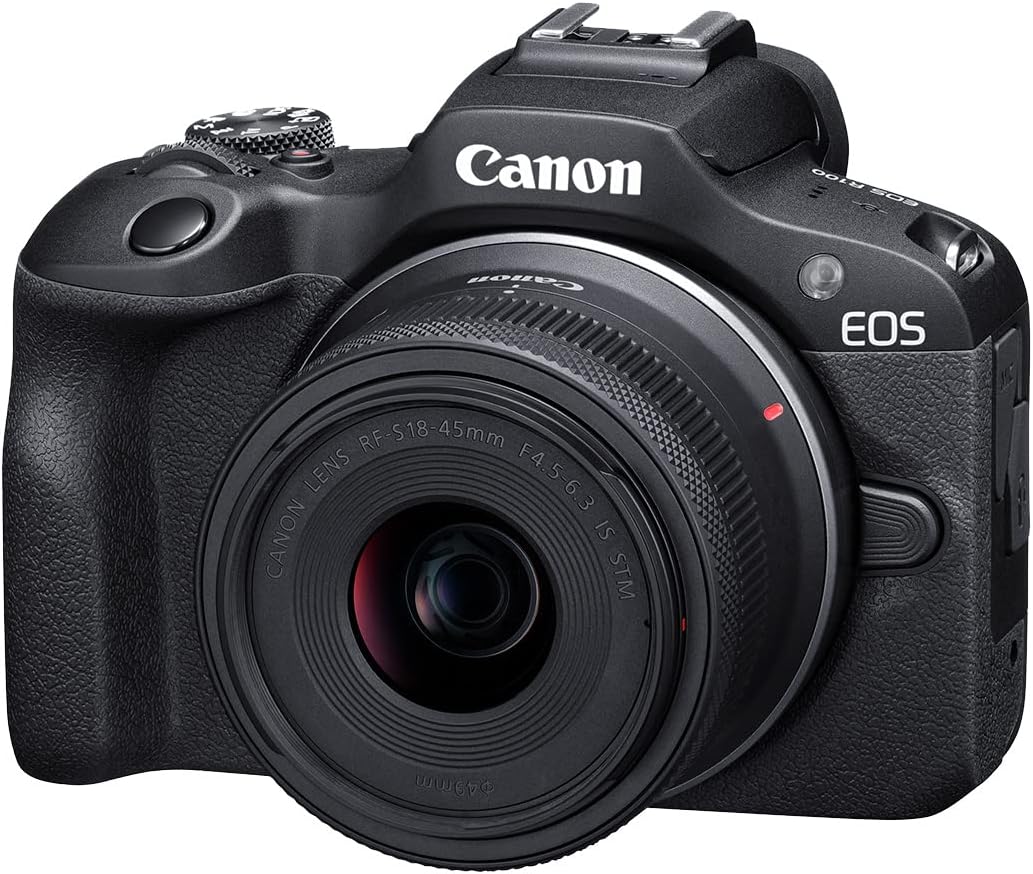
An interchangeable-lens camera — a camera body where you can swap different lenses in and out depending on what you’re shooting — is the single biggest step up from a smartphone or a fixed-lens point-and-shoot. The key variable that determines almost everything else about one of these cameras is sensor size: the physical dimensions of the light-capturing chip inside the body. A bigger sensor generally gathers more light, produces less noise in dark conditions, and creates that blurry-background “bokeh” effect you see in professional portraits. But bigger sensors also mean bigger, heavier, and more expensive lenses. Under $1,500 in mid-2026, you are choosing between three realistic sensor formats: APS-C (roughly a quarter the area of a 35mm film frame, used in cameras like the Canon R50 and Sony a6400/a6700), Full-Frame (matching that classic 35mm film size, as in the Canon EOS RP), and Micro Four Thirds, or MFT (smaller still, used in OM System bodies like the E-M10 IV, and renowned for compact lens ecosystems). This guide shows you the real-world tradeoffs so you can make the call with money in hand.
The Three Formats, Honestly Compared
APS-C: The Sweet Spot for Most First-Time Buyers
APS-C is where the market concentrates for good reason. Bodies are compact, the lens ecosystems are mature, and the image quality ceiling is high enough that most buyers never outgrow it.
Canon R50 sits around $680 body-only and is the entry point into Canon’s RF-mount ecosystem. Reviewers at The Verge and DPReview consistently describe it as a genuinely fun camera to use — the kind of thing that, as one owner wrote in a widely cited review pattern, turns a Renaissance fair into a two-hour photography session you didn’t plan. The autofocus subject tracking is fast and reliable for the price. The real constraint, flagged repeatedly in DPReview’s R50 coverage, is buffer depth — the camera’s short-term memory for rapid-fire shots. In burst mode (shooting many frames per second to catch fast action), the R50 fills its internal buffer quickly and then slows to a crawl while it writes images to the memory card. For portraits, travel, and casual sports this barely matters. If you’re photographing wildlife or youth soccer, it matters a lot.
Sony a6400 (APS-C, E-mount) remains a strong buy in 2026 even though it’s a generation old. The specific data point worth naming: reviewers who dismissed the kit lens as mediocre consistently report being surprised by it in real-world use. One widely cited owner review described Alaska cruise imagery as “crisp and colorful,” directly undercutting the conventional wisdom that kit lenses are always worth skipping. The a6400’s real strength is autofocus — its subject-tracking system punches above its price — and the E-mount lens catalog is the deepest of any mirrorless system.
Sony a6700 (APS-C, E-mount) steps up to roughly $1,300 body-only and adds AI-assisted subject recognition that reviewers at DPReview describe as genuinely class-leading. The AI tracking identifies and locks onto subjects — humans, animals, vehicles — with a consistency that owners in long-run reviews call almost unsettling in the best way. The honest counterpoint: Sony’s menu system is genuinely complex. DPReview’s a6700 review specifically flags menu navigation as a friction point for new users, and this is not a minor quibble. Budget time to learn it, or budget frustration if you don’t.
Full-Frame Under $1,500: The Canon EOS RP Case
Full-frame at this price tier means one camera in 2026: the Canon EOS RP, now available used or refurbished in the $900–$1,100 range. Full-frame sensors produce measurably better low-light performance and a shallower depth-of-field (stronger background blur) at equivalent apertures. Those are real advantages, not marketing noise.
The problem is the glass. Canon’s RF-mount full-frame lenses are expensive. The RF 50mm f/1.8 — the cheapest useful prime — runs around $200, which is fine. But if you want a versatile zoom, you’re looking at $500–$1,200+ for RF options. Wirecutter’s mirrorless camera roundup makes the point plainly: a full-frame body with a mediocre kit lens often loses to an APS-C body with a sharper, faster prime. The sensor advantage doesn’t survive a lens disadvantage.
The verdict: the EOS RP makes sense if you’re acquiring lenses gradually and your primary use case is low-light or portrait work where sensor size delivers a visible payoff. It’s a harder case if you need reach (telephoto zoom), because full-frame telephoto glass is punishingly expensive.
Micro Four Thirds: Compact System, Hidden Upgrade Costs
OM System E-M10 IV (Micro Four Thirds) is the entry point here, priced around $650–$750 with kit lens. The MFT sensor is physically smaller than APS-C, which matters in low light — but OM System compensates with class-leading in-body image stabilization (IBIS), which is a gyroscopic system that moves the sensor to counteract camera shake. For handheld video, architecture, and travel shooting, IBIS at this level is a genuine differentiator.
TechRadar’s MFT buyer’s guide consistently highlights the E-M10 IV’s in-camera learning tools — scene modes that adapt to subject type, art filter modes that encourage experimentation — as a real on-ramp for new shooters. One reviewer specifically described the body as “almost pocketable in a jacket pocket,” which is not hyperbole: MFT bodies are genuinely smaller than APS-C equivalents.
The hidden cost is real and worth naming explicitly: an owner review that circulates frequently in MFT communities discloses that an upgraded M.Zuiko lens (OM System’s first-party glass) cost nearly as much as the camera body itself. The MFT lens ecosystem is excellent, but the best glass isn’t cheap. If you start with the kit lens and want to upgrade, budget accordingly.
By the Numbers
| Format | Example Body (2026 street price) | Sensor Area | Low-Light Ceiling | Body Weight (approx.) | Lens Ecosystem Cost to Build |
|---|---|---|---|---|---|
| APS-C | Sony a6700 (~$1,300) | ~366 mm² | High | ~429g | Moderate–High |
| APS-C | Canon R50 (~$680) | ~329 mm² | Moderate | ~375g | Moderate |
| Full-Frame | Canon EOS RP (~$1,000 refurb) | ~864 mm² | Very High | ~485g | High |
| Micro Four Thirds | OM System E-M10 IV (~$700) | ~225 mm² | Moderate | ~342g | Moderate (steeper at upgrade tier) |
Sensor area figures derived from published manufacturer specifications. Body weights per manufacturer spec sheets.
The Lens Ecosystem Decision Is as Important as the Body
This is the point most first-time buyers underweight. You are not buying a camera — you are buying into a mount system, meaning the specific physical and electronic interface between body and lens. Canon RF lenses do not fit Sony E-mount bodies natively, and vice versa. Once you own two or three lenses for a system, switching costs are real.
Sony’s E-mount is the deepest catalog: first-party Sony G and G Master lenses, plus Sigma, Tamron, and Zeiss all produce native E-mount glass. If long-term flexibility matters, E-mount’s breadth is a genuine advantage.
Canon’s RF-mount is newer and still building out its third-party ecosystem, though Sigma announced RF-mount support in 2024 and the catalog is growing. The key advantage of RF is optical quality per dollar at the mid-range: lenses like the RF 35mm f/1.8 Macro are widely praised in DPReview’s RF lens coverage as overperforming their price.
OM System’s MFT mount has excellent native glass and full Panasonic lens compatibility (both brands share the MFT standard), giving you a surprisingly broad selection for a “niche” format.
Frequently Asked Questions
Should a beginner buy a cheaper body and invest in better lenses, or buy the best body they can afford?
For most buyers, the lens-first logic is correct — but only up to a point. A weak autofocus system on a cheap body will frustrate you before a mediocre lens will. The practical answer: buy a mid-tier body (Canon R50, Sony a6400) rather than the cheapest option available, then allocate remaining budget to one fast prime (a lens with a large, fixed aperture like f/1.8, which lets in more light and blurs backgrounds). You’ll get more from that combination than from a $1,200 body with only the kit lens.
Is full-frame worth it at the Canon EOS RP price point vs. buying a Sony a6700?
For most first-time buyers in 2026, no. The a6700’s AI tracking, deeper feature set, and significantly broader affordable lens catalog produce better real-world images across more shooting scenarios. The EOS RP’s full-frame sensor advantage in low light is genuine but doesn’t survive the lens cost disadvantage unless you’re shooting in near-dark conditions regularly.
Will Canon RF lenses work on both the R100 and R50 if I upgrade bodies later?
Yes. Both the Canon R100 and R50 use the RF mount. Any RF lens you buy for either body will work on any current or future Canon RF body, including full-frame bodies like the R6 Mark II or R5. This is a meaningful long-term argument for starting in the Canon RF ecosystem: your glass investment transfers upward.
How does the OM System E-M10 IV compare to an APS-C camera for low-light photography?
The smaller MFT sensor produces more digital noise (grain) in dim conditions than APS-C at equivalent settings — this is physics, not a flaw in OM System’s engineering. The E-M10 IV partially compensates with superior IBIS, letting you use slower shutter speeds without blur, which effectively extends usable low-light range. For static subjects in low light, it nearly closes the gap. For moving subjects (people at indoor events, animals), the APS-C advantage in low light becomes more pronounced.
Is the Sony a6400 still worth buying now that the a6700 exists?
Yes, with caveats. If the a6700’s $600 price premium over the a6400 would strain your lens budget, buy the a6400 and spend the difference on glass. The a6400’s autofocus is still excellent by any honest measure, and the E-mount lens catalog means you can build toward the system over time. If you shoot fast-moving subjects and want the AI tracking advantages, the a6700 justifies its premium.
What accessories do I actually need when buying your first mirrorless camera?
The non-negotiable short list: a second battery (manufacturer batteries preferred for reliability), a fast UHS-I or UHS-II SD card matched to your body’s write speed, and a camera strap that’s actually comfortable for your carry style. A UV filter for lens protection is optional and debated among photographers — if you’re shooting outdoors in dusty or wet conditions, it’s cheap insurance. A dedicated bag matters more than most beginners expect; protect the investment.
The Decision Rule
If you’re standing at the purchase decision right now, here’s the framework:
- If your priority is versatility, autofocus for moving subjects, and long-term ecosystem depth → Sony a6700 is the answer if budget allows; Sony a6400 if it doesn’t.
- If you want to start light, learn deliberately, and value in-camera guidance tools → OM System E-M10 IV, with eyes open to lens upgrade costs.
- If you’re primarily shooting portraits or low-light scenes and plan to invest in glass gradually → Canon EOS RP on the refurbished market, paired with one or two RF primes.
- If you’re a first-time buyer who wants a capable, fun system that won’t punish beginner mistakes and fits Canon’s RF upgrade path → Canon R50 is the on-ramp, knowing the buffer limitation exists and accepting it.
The cameras in this guide all produce images that would have been professionally publishable ten years ago. The format debate matters less than shooting consistently, learning your glass, and understanding the limits of your specific body. Buy the system you’ll actually use, start shooting, and let the upgrade itch arrive honestly.