June 3, 2026 • Sanjay Gupta • 10 min reading time • Prices verified June 24, 2026
Drones Under 249g vs. Over 250g: The FAA Registration Line That Changes What You Can Fly
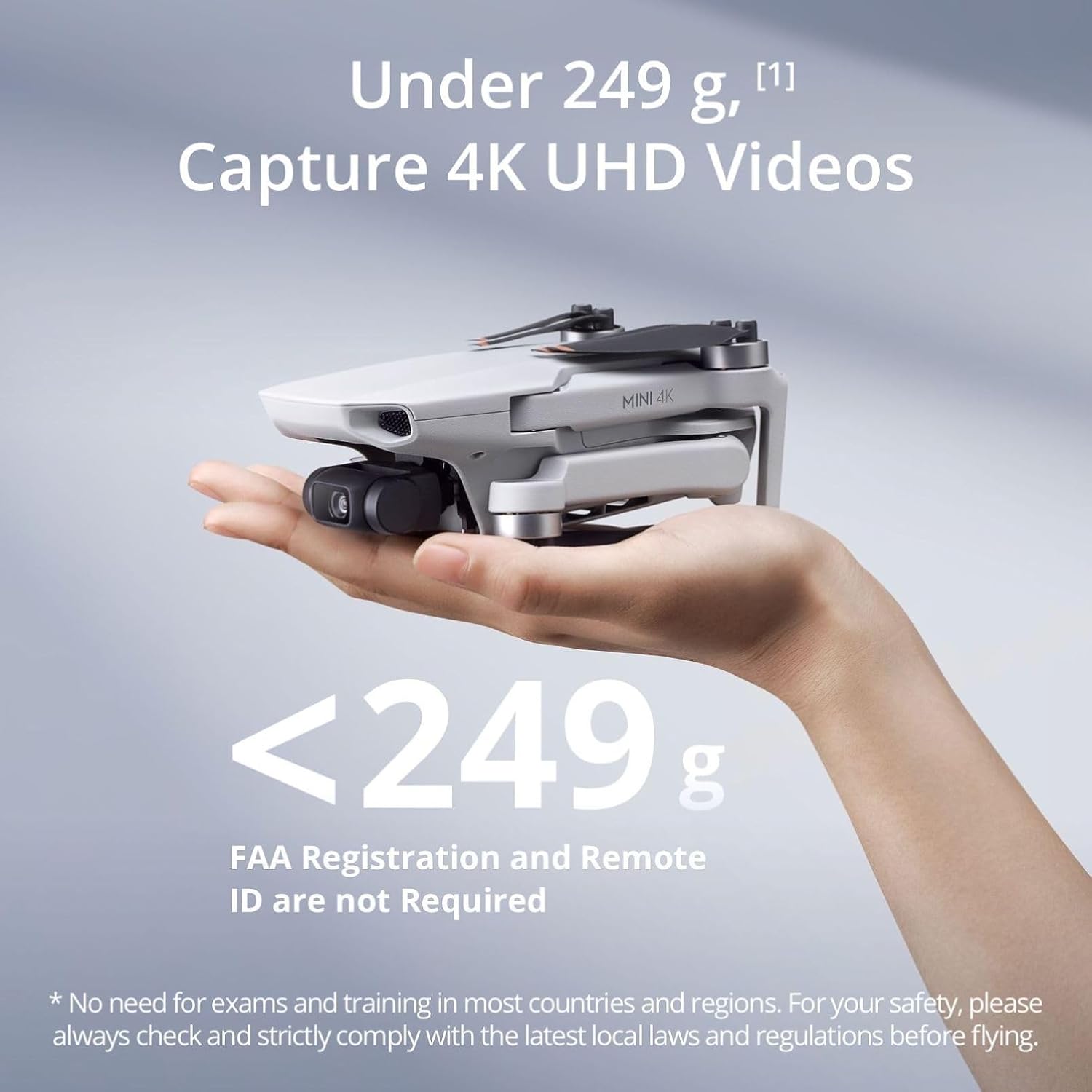
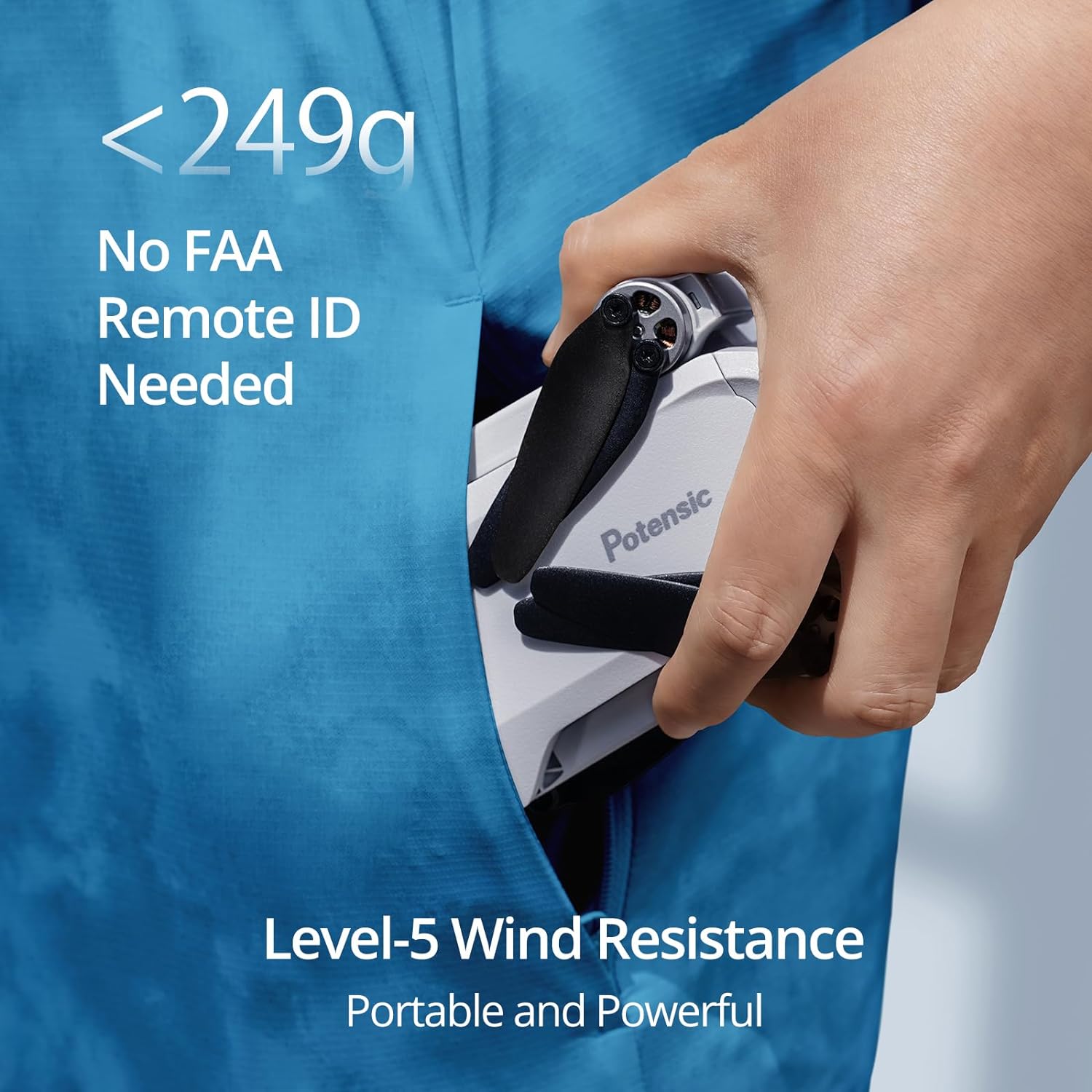
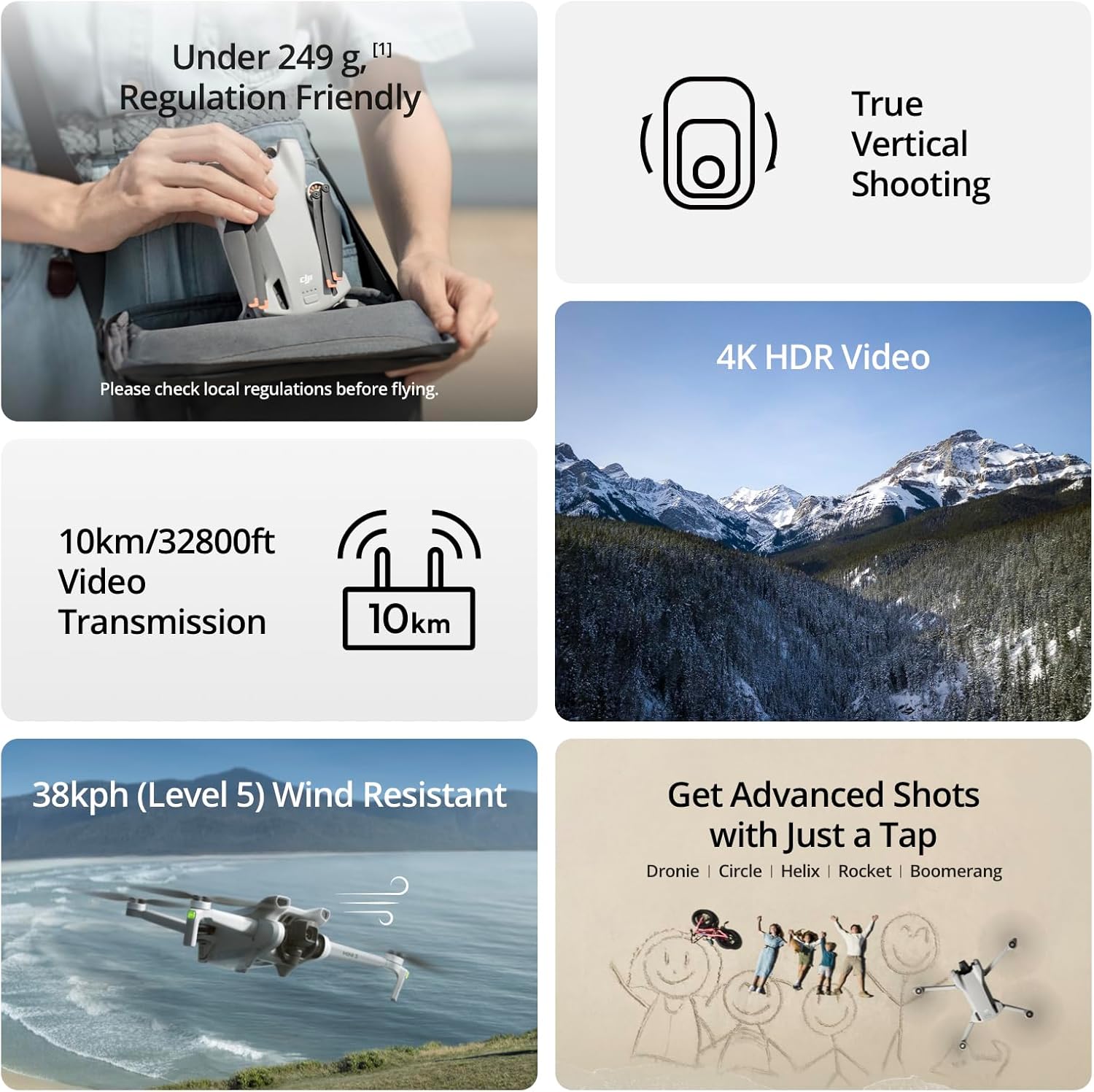
If you’ve been shopping for a drone recently, you’ve probably noticed that the spec sheets for small consumer models make a surprisingly big deal out of weight — especially whether a drone comes in under 249 grams (about half a pound, or roughly the weight of a large apple). That number isn’t a marketing quirk. It’s a regulatory threshold set by the U.S. Federal Aviation Administration (the FAA, the federal agency that governs all aircraft in American airspace, including drones). Drones that weigh 250 grams or more must be registered with the FAA before they fly — a process that carries a $5 fee, creates a federal record tied to your name, and triggers a broader set of operating rules. Drones that stay below that threshold are exempt from registration under recreational rules, which makes them dramatically simpler to fly for most casual and semi-professional use cases. This article maps exactly what that line means, which current drone models land on each side of it, and how to decide which category actually serves your operation.
| EDITOR'S PICKPotensic ATOM 2 Drone with Came… | Mid-tier[DJI Mini 3](https://www.amazon.com/dp/B0BL3NZT5D?tag=greenflower20-20) | Budget pick[Potensic ATOM SE GPS Drone with…](https://www.amazon.com/dp/B0BFWS4N4T?tag=greenflower20-20) | |
|---|---|---|---|
| Camera | 4K/8K Photo | 4K | 4K EIS |
| Gimbal | 3-Axis Gimbal | — | — |
| Flight Time | — | 38 min | 62 min |
| Transmission | 10KM | 10KM | 4KM |
| Weight | Under 249g | — | Under 249g |
| Vertical Shoot | ✓ | ✓ | — |
| Price | $324.99 | $269.00 | $185.69 |
| See on Amazon → | See on Amazon → | See on Amazon → |
What the 249g Rule Actually Covers — and What It Doesn’t
Let’s be precise, because this is where a lot of buyers get tripped up.
The FAA’s registration requirement, established under the 2016 FAA Extension, Safety, and Security Act and codified in the agency’s UAS Registration rules, applies to any drone weighing 250 grams or more at takeoff — including payload. Fly recreationally with an unregistered 260g drone and you’re technically violating federal law. The FAA’s published enforcement guidance describes a penalty structure running from civil fines up to $27,500 per violation; criminal penalties can reach $250,000 and imprisonment in egregious cases.
Sub-249g drones are exempt from that registration requirement for recreational flyers. But — and this is the part that catches practitioners — if you’re flying commercially under Part 107 (the FAA’s rule set for small unmanned aircraft operated for business purposes, including real estate photography, inspection work, or any paid content creation), you must register your drone regardless of weight. The 249g exemption is a recreational-only provision.
By the numbers:
- 249g or less → no FAA registration required for recreational flight
- 250g or more → $5 FAA registration required; drone gets a registration number you must label on the aircraft
- Any weight, commercial use → Part 107 certification + registration required, full stop
- Part 107 Remote Pilot Certificate test fee (IACRA system): $175 as of early 2026
As Ars Technica explained in their feature “What the FAA’s drone rules actually mean for hobbyists,” the practical consequence is that the 249g class represents the lowest-friction path to recreational airspace — particularly in controlled airspace around airports, where sub-249g drones still need authorization via the FAA’s LAANC system (Low Altitude Authorization and Notification Capability, an automated approval network) but avoid the registration layer entirely.
The Real-World Tradeoffs: Camera, Flight Time, and Wind Resistance
Understanding the regulatory divide is step one. Step two is understanding what manufacturers give up — and what they preserve — to hit that 249g target, because the compromises are real and they affect daily operations.
Sub-249g Class: The DJI Mini 4 Pro
The DJI Mini 4 Pro is the current benchmark for this category. At 249g (DJI’s published spec), it carries a 1/1.3-inch CMOS sensor capable of 4K/60fps video and supports D-Log M color profiles for post-production flexibility. The Verge’s hands-on review of the Mini 4 Pro concludes that the image quality punches well above what you’d expect from a drone engineered around a weight ceiling, and Wirecutter’s Best Drones guide consistently positions it as the top pick for anyone who wants serious imagery without the regulatory overhead.
The tradeoffs are real, though:
- Wind resistance: DJI rates the Mini 4 Pro for up to 10.7 m/s (Level 5 winds, roughly 24 mph). That’s competent but noticeably below what heavier platforms handle. Operators working coastal, mountain, or urban canyon environments consistently report that sub-250g drones get pushed around in conditions where a 900g platform stays stable.
- Battery life: DJI’s published spec is 34 minutes maximum flight time. Real-world use with active camera operation in mild wind typically lands closer to 25–28 minutes — workable for most real estate or short-form content shoots but tight for extended inspection passes.
- Obstacle avoidance: The Mini 4 Pro offers omnidirectional sensing, which is genuinely impressive at this weight class. Earlier sub-250g models shipped with only downward sensing, a limitation noted across multiple aggregated reviews.
- Rolling shutter: At this sensor size and weight budget, there is no mechanical shutter. The sensor reads line by line, which can produce a subtle “jello” wobble on fast lateral movement. Most operators manage it through flight style adjustments, but it is worth knowing before purchase.
Potensic
$185.69
In stock on Amazon
Check price on AmazonMid-Tier Over-250g: The DJI Air 3
Once you cross the registration threshold, the ceiling lifts. The DJI Air 3 (approximately 720g) represents the mid-tier prosumer case. It ships with a dual-camera system — a wide-angle primary and a 3x medium-telephoto — both on half-inch sensors. DJI’s published specs rate it at 46 minutes maximum flight time. Wind resistance climbs to 12 m/s (Level 6, approximately 27 mph), and the added mass translates to noticeably smoother footage in gusty conditions.
TechRadar’s coverage of DJI’s 2024–2025 prosumer drone lineup notes that the Air 3 occupies a compelling middle position: the registration requirement is a one-time, five-minute process for a $5 fee, and the capability gain over the Mini 4 Pro is substantial for operators who need dual focal lengths or longer flight windows. The drone remains genuinely travel-friendly; it folds into a compact form factor and fits in a mid-size daypack without a dedicated rolling case.
For recreational operators who fly in variable-wind environments, or Part 107 practitioners who need portability without sacrificing the second focal length, the Air 3 is the rational step up.
DJI
$269.00
In stock on Amazon
Check price on AmazonPremium Over-250g: The DJI Mavic 3 Pro
The DJI Mavic 3 Pro (approximately 958g) represents the professional standard in this weight class. It carries three cameras — wide, medium tele, and tele — with a four-thirds CMOS sensor on the primary lens. DJI’s published specs rate it at 43 minutes maximum flight time. A mechanical global shutter is available on the Cine Premium variant, which eliminates rolling shutter artifacts entirely — a distinction TechRadar’s prosumer drone coverage calls out as the primary reason working videographers choose this platform over lighter alternatives.
Wind resistance specs reach 12 m/s (Level 6), and the mass of the platform provides real-world stability that operators in aggregated long-run reviews describe as the difference between footage they can use and footage they cannot in gusty conditions.
For practitioners doing paid work — real estate videography, construction progress documentation, insurance inspection, broadcast-adjacent content — the Mavic 3 Pro is where the image quality and mechanical shutter justify the equipment cost. The registration requirement at this tier is a paperwork formality, not a meaningful operational constraint. What the weight does affect is travel friction: the Mavic 3 Pro requires a dedicated hard case and adds meaningful bulk to a travel kit. Operators doing frequent commercial work typically accept this as the cost of professional-grade deliverables.
Potensic
$324.99
In stock on Amazon
Check price on AmazonAirspace Authorization: Where the Weight Line Matters Less Than People Think
Here’s a nuance that Wirecutter’s Best Drones guide and multiple FAA educational documents emphasize, and that many buyers miss: weight class does not determine where you can fly — airspace classification does.
Whether you’re flying a 200g mini drone or a 950g Mavic 3 Pro, you cannot legally fly within controlled airspace near an airport without LAANC authorization (or a manual waiver for areas LAANC doesn’t cover). The LAANC system is free, instant in most cases, and accessible through apps like Aloft or through DJI Fly’s integrated authorization request tools. Sub-249g drones still need LAANC approval in controlled airspace. They just don’t need a registration number.
What registration does affect is accountability and traceability. FAA registration creates a record linking the aircraft to an owner. If a drone goes down in an incident — near an airport, over a crowd, or in a property dispute — that registration number is how investigators trace back to the operator. Practitioners operating commercially under Part 107 should treat registration as baseline professional hygiene, not a regulatory burden.
National parks are a separate and commonly misunderstood layer: the National Park Service bans drone launches, landings, and operation within park boundaries under a 2014 policy memorandum, regardless of weight or registration status. A sub-249g recreational drone is just as prohibited over Yosemite Valley as a two-kilogram heavy-lift platform. This is one of the most common misconceptions that surfaces in buyer discussions, and it is worth stating plainly.
The Decision Frame: Which Side of the Line Fits Your Operation?
If you are evaluating a drone purchase right now, here is the explicit if-then structure:
If your use is primarily recreational and you fly in suburban or rural environments without controlled airspace nearby: The sub-249g class — specifically the DJI Mini 4 Pro at its current street price — is the rational choice. You avoid the registration layer, the drone travels light, and the image quality is genuinely capable for personal projects and social content. Wirecutter names it a top pick in their Best Drones guide for exactly these reasons, citing the combination of sensor quality, obstacle avoidance, and weight compliance as unmatched at this tier.
If you’re flying recreationally but in wind-exposed environments, or you want a second focal length and longer flight windows: Consider whether the over-250g registration overhead is actually a burden — it isn’t. Five minutes, $5, once. The DJI Air 3 adds meaningful stability, extended flight time, and a dual-camera system at a weight that remains travel-friendly. The registration requirement is a formality. The capability gain is real.
If you’re operating commercially under Part 107 — or planning to: Weight class is largely irrelevant to your registration obligation. You’re registering regardless. The decision shifts entirely to capability: does your client work require the image quality, mechanical shutter option, and triple-camera flexibility of a Mavic 3 Pro, or can a Mini 4 Pro deliver the shots at a lower equipment cost and lighter travel profile? Many Part 107 operators run both — the Mini 4 Pro for jobs where discretion and portability matter, and the Mavic 3 Pro for high-stakes deliverables where sensor size and shutter type determine whether the footage is usable.
If you’re evaluating total cost of ownership: Factor in manufacturer protection plans (DJI Care Refresh), spare batteries ($65–$95 each depending on platform), and ND filter sets ($40–$80 for quality third-party options). These accessories routinely add $300–$500 to the effective first-year cost on either platform. The registration fee is genuinely the smallest number in the total cost equation — a point worth keeping in perspective when the $5 fee is sometimes treated as a deciding factor.
The Bottom Line
The 249g threshold is real and consequential — but it is consequential in a specific, narrow way. For recreational flyers, staying under it eliminates a federal registration layer and reduces operational friction. For commercial operators, it is irrelevant to registration status. For everyone, it correlates with real capability tradeoffs in wind resistance, sensor size, and flight endurance that matter far more to daily operations than the fee on the other side of the line.
The practical rule: if weight and portability are your primary constraints, the DJI Mini 4 Pro delivers exceptional capability within the sub-249g window and is the right starting point — a conclusion shared by both The Verge’s hands-on review and Wirecutter’s Best Drones guide. If you are doing paid work or flying in demanding conditions, cross the line, register the drone in five minutes, and buy the platform that matches the job. The Air 3 covers the mid-tier with dual cameras and extended flight time; the Mavic 3 Pro covers professional deliverables where the four-thirds sensor and mechanical shutter are the actual product. The regulatory overhead is not the story. The capability gap is.