June 26, 2026 • Sanjay Gupta • 10 min reading time • Prices verified June 24, 2026
Budget Drones Under $300: DJI Mini 4K vs. Potensic ATOM SE vs. DJI Neo
Budget Drones Under $300: DJI Mini 4K vs. Potensic ATOM SE vs. DJI Neo
Consumer drones — small, remotely piloted aircraft you fly with a phone or handheld controller — have dropped dramatically in price over the last few years. Where “budget” once meant unreliable junk that barely hovered, today’s sub-$300 options can shoot genuine 4K video (footage at 3840×2160 pixels, roughly four times the resolution of standard HD) and hold a steady position in the air on their own. If you’re buying your first drone or shopping for someone who is, the question is no longer can these things fly — it’s which one fits your actual use case. This article breaks down the three most competitive options in the category right now, names their real tradeoffs, and gives you a clear decision rule so you’re not spinning in place for two hours.
| EDITOR'S PICK[DJI Mini 4K Fly More Combo](https://www.amazon.com/dp/B0CXJCXN17?tag=greenflower20-20) | Mid-tier[Potensic ATOM SE GPS Drone](https://www.amazon.com/dp/B0BFWS4N4T?tag=greenflower20-20) with… | Budget pick[DJI Neo](https://www.amazon.com/dp/B07FTPX71F?tag=greenflower20-20) | |
|---|---|---|---|
| Camera Type | 4K UHD | 4K EIS | 4K UHD |
| Weight | <249 g | Under 249g | 135g |
| Batteries | 3 | — | — |
| Max Flight Time | 93 min | 62 min | — |
| Video Transmission | 10km | 4KM | — |
| Gimbal | ✓ | — | — |
| Price | $293.55 | $185.69 | $139.00 |
| See on Amazon → | See on Amazon → | See on Amazon → |
What You’re Actually Choosing Between
Before the specs, a framing point: these three drones serve different masters.
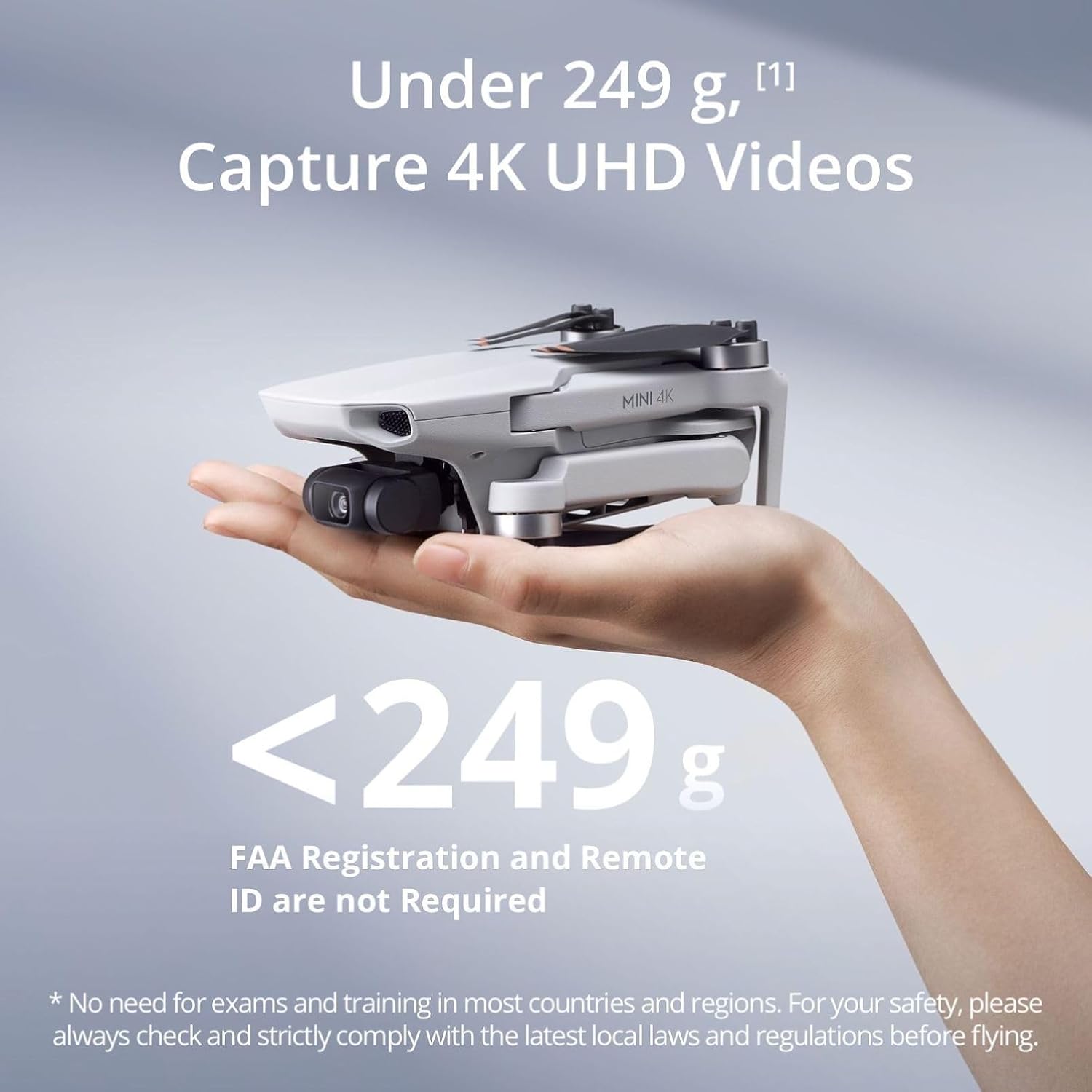
The DJI Mini 4K is a traditional folding drone — it packs flat, unfolds to fly, and looks like a miniature version of the professional-grade machines videographers carry on shoots. Its defining feature is a 3-axis mechanical gimbal, which means the camera sits on a small motorized mount that actively cancels vibration and tilt in three directions. Owners consistently describe the footage as “camera on a tripod” smooth, even on a first flight. That’s not marketing language — drone coverage at TechRadar and CNET’s drone buyer’s guide (CNET, “Best Drones,” updated 2025) repeatedly cite stabilization as the Mini 4K’s clearest competitive advantage at this price point.
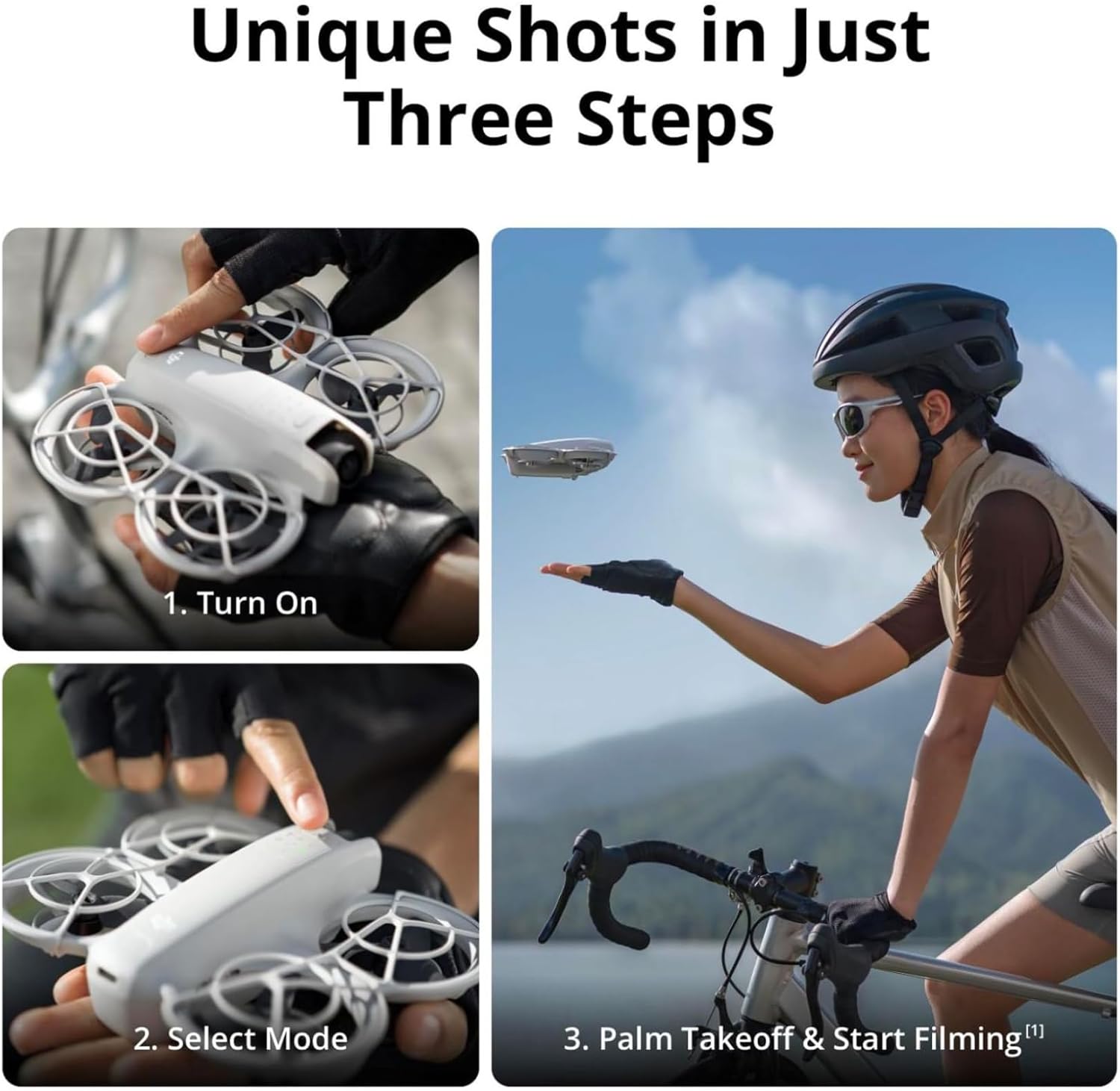
The DJI Neo is a different animal entirely. It’s a compact, propeller-guard-equipped “whoop-style” drone — a form factor with the motors tucked inside protective rings — that can take off directly from your palm, operate indoors, and be flown without a traditional controller using only gestures or a smartphone. The Verge’s coverage of the Neo launch (“DJI Neo review,” theverge.com) highlighted how genuinely capable it is in confined spaces. The tradeoff is that the Neo feels more like a smart camera accessory than a serious aerial photography platform. It is a tool, not a replacement for a stabilized outdoor flier.
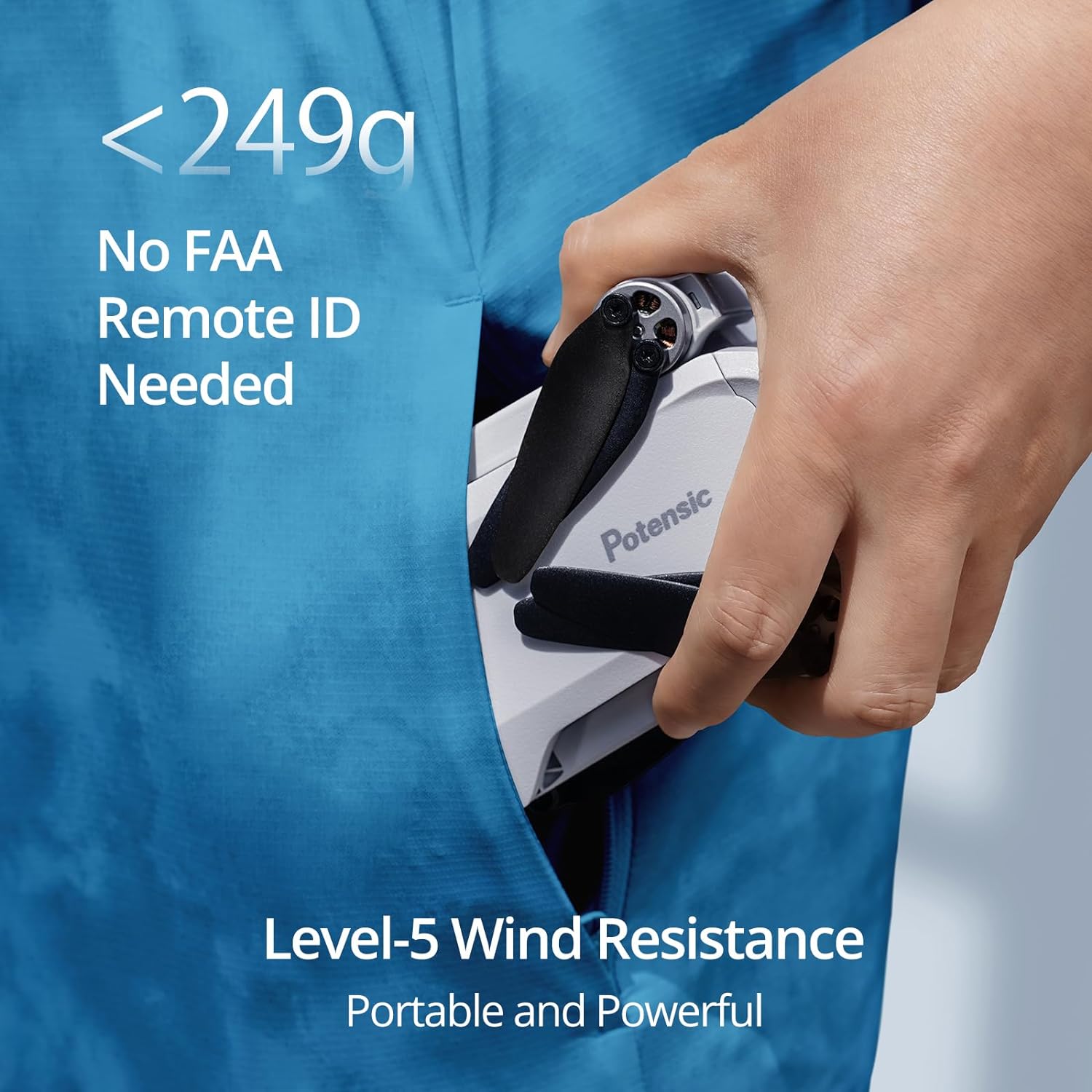
The Potensic ATOM SE is the category’s underdog. It’s a folding GPS drone — GPS meaning it can lock onto satellite signals to hold its position automatically, resist wind drift, and return home on its own — competing directly with the Mini 4K on specs while undercutting it on price. The ATOM SE punches above its weight on paper, and owners specifically call out its autonomous flight modes, particularly the circle-fly orbit feature, as standout value for the price. The catch: Potensic’s firmware history has been rougher than DJI’s, and multiple owners report needing to contact support for early software bugs. The support team is consistently praised for responsiveness, but the onboarding friction is real.
Spec Comparison at a Glance
The table below captures the core numbers from each manufacturer’s official product specifications. Real-world flight time typically runs 25–35 percent shorter than manufacturer ratings under any wind or altitude load — factor that into your battery planning.
| Feature | DJI Mini 4K | DJI Neo | Potensic ATOM SE |
|---|---|---|---|
| Max video resolution | 4K/30fps | 4K/30fps | 4K/30fps |
| Stabilization type | 3-axis mechanical gimbal | Electronic (EIS) | 3-axis mechanical gimbal |
| Manufacturer-rated flight time | ~34 min | ~18 min | ~31 min |
| Weight | 249g | 135g | 249g |
| GPS position hold | Yes | Limited (optical flow indoors) | Yes |
| Controller required | Yes | No — palm/phone/optional | Yes |
| Sub-250g (no FAA reg. by weight) | Yes | Yes | Yes |
The 249g weight on both the Mini 4K and ATOM SE is not an accident. Per FAA DroneZone recreational flyer guidelines (faa.gov, FAA DroneZone), drones under 250 grams are exempt from registration requirements for recreational hobbyist flight — manufacturers have engineered these products specifically to stay just under that threshold.
Where Each Drone Wins
DJI Mini 4K — Best Outdoor Stabilization for Beginners
The mechanical gimbal is the Mini 4K’s entire value proposition, and it delivers. For landscape shots, travel footage, and real estate walkarounds, the stabilization means your first-flight video looks polished rather than shaky. TechRadar’s budget drone coverage (“Best cheap drones,” techradar.com) and CNET’s drone buyer’s guide both cite the Mini 4K’s gimbal performance as the benchmark for this price tier.
One criticism surfaces consistently in owner reviews and is worth taking seriously: there is no 4K/60fps option. The ceiling is 4K/30fps, which means you cannot capture smooth slow-motion footage in 4K. If motion sports or fast-moving subjects are part of your plan, that’s a real limitation that a step up to the DJI Mini 3 would address.
The Mini 4K also benefits from DJI’s ecosystem maturity. Fly More combos, firmware updates, and replacement parts are reliably stocked. That matters more than buyers realize until they need it.
DJI
$139.00
In stock on Amazon
Check price on AmazonDJI Neo — Best for Indoor Use and Low-Fuss Portability
The Neo’s palm takeoff is genuinely useful in tight situations where pulling out a controller and calibrating GPS isn’t practical. Owners report using it at indoor events, in living rooms, and in situations where a traditional drone would be impractical or draw unwanted attention. The Verge’s Neo review specifically noted that the indoor capability exceeds expectations for a drone at this price, and that the gesture-control system works reliably enough for casual self-filming.
What the Neo does not do well: outdoor photography in wind, long-range shots, and anything requiring the locked-horizon look that a mechanical gimbal provides. Its electronic image stabilization (EIS) is software-based correction rather than hardware-based, and while it is good, it is not the same result. If your primary use case is outdoor aerial landscape work, the Neo is the wrong tool — but for the use case it is designed for, nothing at this price comes close.
Potensic
$185.69
In stock on Amazon
Check price on AmazonPotensic ATOM SE — Best GPS Autonomy for the Money
The ATOM SE’s circle-fly orbit mode and return-to-home GPS reliability represent features that, until recently, cost significantly more. Owners who have cleared the firmware learning curve consistently report satisfaction with the autonomous flight modes. The problem is getting through that curve — Potensic’s update cadence and initial software stability trail DJI’s noticeably, a pattern noted across hobbyist reviews aggregated by TechRadar’s drone coverage.
If you are the type of buyer who is comfortable checking for firmware updates before a first flight and willing to contact support when something is off, the ATOM SE is a legitimate value. If you want to unbox, calibrate, and fly with minimal friction, DJI’s ecosystem has a proven edge. Go in knowing you may need to update firmware before flying and budget time accordingly.
DJI
$139.00
In stock on Amazon
Check price on AmazonThe Fly More Combo Question
Almost every buyer in this category eventually faces the Fly More upgrade — a bundle that typically adds two extra batteries, a charging hub, and a carrying bag for $50–$100 more than the base kit.
For a first drone, the math generally favors it. A single battery gives you 20–25 minutes of real-world flight time. Without the combo, your first real outing ends before you have figured out what you are doing. CNET’s drone buyer’s guide (CNET, “Best Drones,” 2025) and TechRadar’s budget drone roundup both note that first-time fliers almost universally wish they had more battery time during early sessions — the learning curve eats flight time faster than you expect. If a Fly More Combo is available for the model you are choosing, treat it as close to mandatory for a first purchase.
Crash Survivability and Parts Availability
Crash survivability is where the DJI versus Potensic gap becomes practical. DJI has extensive parts availability through its own store and authorized resellers — propeller replacements for the Mini 4K cost a few dollars, and body components are reliably stocked. DJI’s Care Refresh program, an optional paid protection plan, covers crash replacement at a reduced cost. New pilots should seriously consider it.
Potensic has parts available through its own support channels, and owners report reasonably responsive service. The caveat is that replacement availability is thinner, and if you need a fast turnaround, the logistics are less predictable than DJI’s.
The DJI Neo’s design philosophy helps here in one specific way: the propeller guards reduce blade damage on low-speed indoor collisions, which are the most common crash type for new fliers using the Neo indoors. For outdoor crashes, the Neo is not meaningfully more durable than its competitors.
Frequently Asked Questions
Does the DJI Mini 4K need FAA registration? For recreational flights in the U.S., no. The Mini 4K weighs 249g, which falls below the FAA’s 250g registration threshold for hobbyist use, per FAA DroneZone guidelines (faa.gov). However, you still must follow all airspace rules — no flying near airports without authorization, no flying over crowds — and commercial use triggers separate requirements regardless of weight.
Can the DJI Neo fly without a phone or controller? Yes. The Neo supports gesture control and palm takeoff without any external device, which is genuinely unusual in this price range. A controller or phone app unlocks more features and extended range, but the base flying experience does not require them. This is a real differentiator for casual indoor use, as noted in The Verge’s Neo review.
How does the Potensic ATOM SE handle wind compared to DJI? Both the ATOM SE and Mini 4K are manufacturer-rated for similar wind resistance, approximately Level 5 or 19–24 mph. In open fields with clear sky, the ATOM SE holds its own. The more relevant variable is GPS lock consistency — DJI’s positioning is generally regarded as more reliable in edge cases like heavy tree canopy or dense urban environments, based on aggregated owner reports in TechRadar’s drone coverage.
Is the Fly More Combo worth the extra cost for a first drone? Yes, with high confidence, for any of these three. Battery count is the single most-cited regret among first-time buyers who skipped the combo. More flight time means a faster learning curve and less frustration on early outings.
How do these drones compare to spending $500 or more on a DJI Mini 3? The DJI Mini 3 adds 4K/60fps video, a vertically tilting camera for portrait-orientation content, improved obstacle sensing, and a longer-range controller. For creators who know they will use the platform seriously, the Mini 3’s ceiling is meaningfully higher. For someone still learning whether drone flying is a habit they will keep, the Mini 4K is a rational first step — the image quality gap is noticeable but not embarrassing, and the savings fund extra batteries and a potential Care Refresh plan.
The Decision Rule
If you want the cleanest outdoor footage with minimum setup friction and plan to fly primarily in parks and open spaces: the DJI Mini 4K is the right call. Its mechanical gimbal produces results that visibly outclass EIS-only alternatives for landscape and travel work, and DJI’s ecosystem ensures you will never be stuck without parts or support.
If you want something you can fly in your living room, take to events, or use for self-filming without pulling out a controller: the DJI Neo fits that use case better than either alternative. Don’t try to make it into an outdoor landscape tool — it isn’t one.
If you want the most GPS flight modes for the money and are comfortable with a slightly rougher software setup experience: the Potensic ATOM SE is the honest value pick, particularly if circle-fly and autonomous orbit shots are on your creative wishlist. Go in knowing you may need to update firmware before your first flight and budget time accordingly.
At this price tier, none of these is a bad purchase. The mistake is buying the wrong one for your use case — and now you know which one is which.